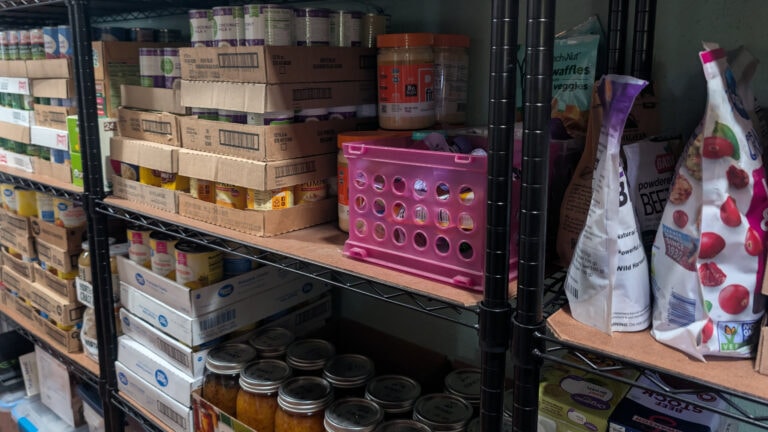
Life is a constant juggling act.
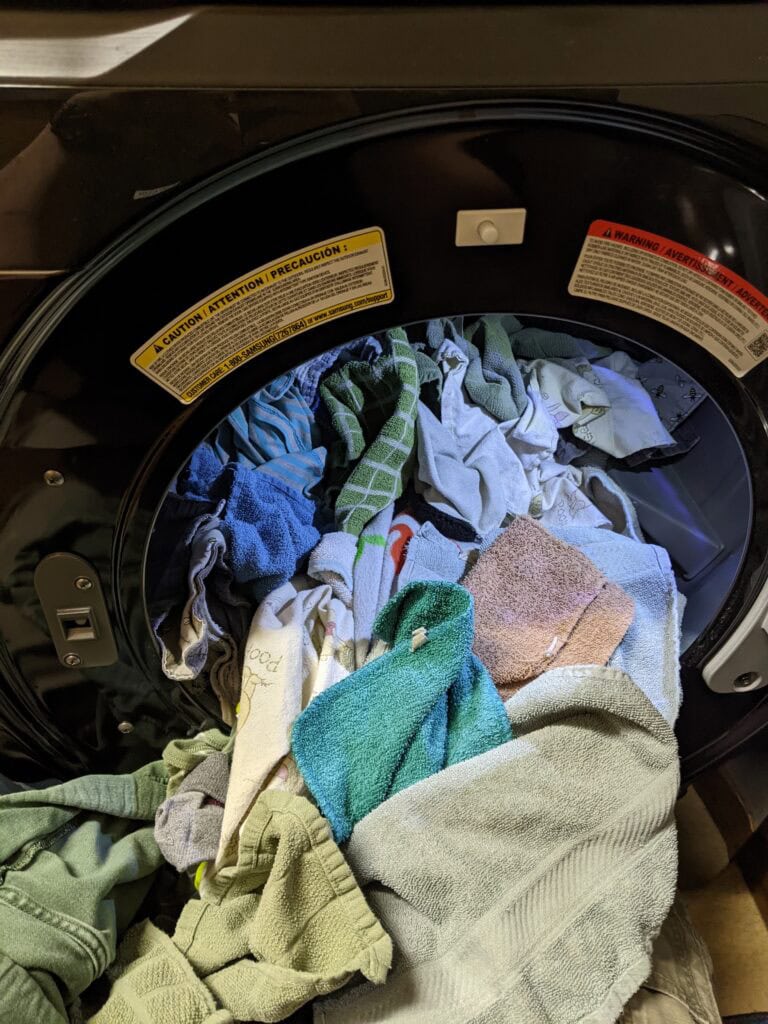
One minute we are running full out trying to keep the animals fed and taken care of. Next, we are ankle-deep in laundry. If we are lucky, we might get a little downtime at midnight before the day starts again at 5 or 6 am.
Yet having a balance will help you feel more relaxed and actually enjoy life. Or the time you get to spend with your kids while they are young.
While I can’t say we are perfect in any way, I think we do alright at times keeping our family in balance. So, in this article, I want to share eight tips we have learned on the journey that could help you stay in balance.
Tip #1 – Pick a schedule to keep balance
Part of homestead includes a certain amount of craziness. You never know when an animal will need you, or the next thing will break.
But there are things that you can have control of.
The key to this tip is to pick a schedule for various tasks so you can be consistent and not overwhelmed by everything at once.
Start simple with things like laundry. Make a schedule and stick with it. Or plan a schedule at the beginning of the week that will reflect the unmovable appointments allowing you to work around them.
Plan each day so you know what you need to do and can anticipate the needs of the day better. This will save you time in the long run and might help you shift gears faster between tasks.
A few years back, I picked up this planner. It was nice to use and had a great way to track my daily activities. I also liked the follow-up sections so I could review my progress on tasks.
Tip #2 – Combine activities
When you are planning your schedule, another way to save time is to combine.
For our family, we have my VA medical appointments on a regular basis. But something that has helped us function better and feel less stressed has been to combine the appointments as much as possible.
We combine both by location and by day. This might take some work and time if you have a lot of fixed things. But once we compressed everything day, it freed up other days to get the homestead chores, cleaning, and even fun time.
Even with things that are not on your homestead, you can still combine. Make a single day the one you focus on gardening alone. Choose another to clean the house from top to bottom, instead of random little spurts.
Tip #3 – Homeschooling is more than books
Yes, your children need some book learning. But unless you are supers, you can’t move at crazy speeds or multitask really efficiently.
The cool thing with homeschooling and homesteading is learning can take place everywhere. From the kitchen to the barn and everywhere in between.
For us, a portion of our kids’ schooling is learning to cook. You get to wrap math, critical thinking, reading, and so many more skills in something as simple as making muffins. We got our kids this cookbook so they could start learning basic recipes and skills.
Even tasks like taking care of the rabbits, planting a garden, or splitting wood can become a school lesson. And it’s way better than the nose in the book sitting at a table all day.
Tip #4 – Work and make time as a family
Another great way to avoid constant overwhelm is to get everyone to pitch in together.
For our family, chores day means that everyone has different jobs, but we are all working towards the common goal of a clean house. It also means that when there are random chores that need a catch-up, we all pitch in and get it done.
It’s a lot more fun doing chores together than feeling like you must do it all alone.
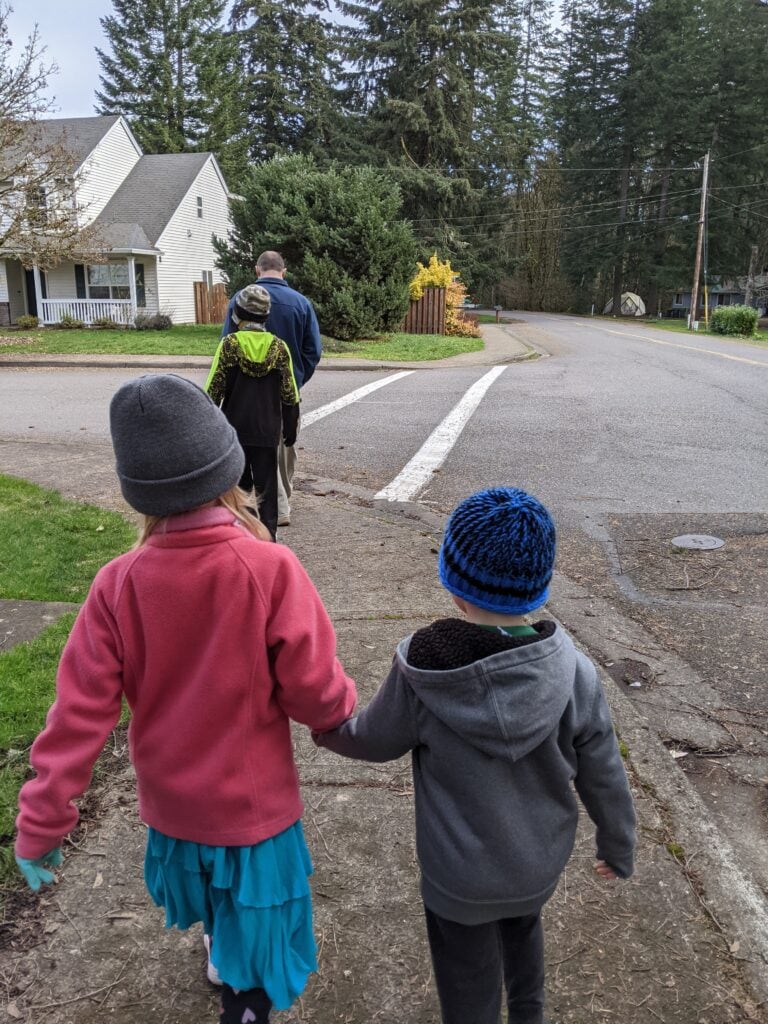
Yes, there will be complaints, mainly from the kids. But once the work is done, playtime can quickly resume.
Once the chores are done, take the time to do fun things with the kids and make time for your spouse as well.
Tip #5 – Assign chores
Part of working as a family is not doing it all yourself.
Assign tasks to each family member and trust them enough to get the job done the right way. Find tasks that are appropriate for their age range. Your eight-year-old might be excellent at feeding the animals, but you might not want them thick into butchering (or maybe you do).
By pre-assigning the chores, you don’t have to hover over and tell everyone what to do all the time, lowering your stress levels as well.
Assignments can go beyond kids. Have chores assigned for both you and your spouse. This is important to ensure your kids feel like they are not alone. Plus, it keeps you from feeling like everything is on you alone.
Tip #6 – Find friends to hang out with
Homesteading can be lonely. Just you, the plants, and chickens.
Isolation can do funny things to people. Even if you go each week to outside activities, unless you find friends, you will feel lonely.
Find people that you connect with at church, local activities, or groups. We have friends in the local HAM radio club, people we enjoy hanging out with at church, and extended family. Look into our off-grid communications article for more information on the radio basics we use. HAM radio is a great hobby to get into and chat with people from all over the world.
This keeps us from going crazy with just each other and allows us to explore hobbies or other interests.
Tip #7 – Learn your limits
We all have a breaking point. Everything does.
If you learn where your max capacity is, then you will be able to stop before you reach those breaking limits. By stopping before you are overwhelmed, your stress levels will stay more even. Plus, you are less likely to explode on your family members.
Once you know what your limits are, communicate those limits to the people around you.
Let your spouse know what you can do and when you feel like it’s too much on your plate. This will allow them to jump in taking some of the load off and keeping everyone on an even keel.
Sometimes it’s ok to just let things go. In this article, we discuss why we don’t get everything done, and how we can be okay with that.
Tip #8 – Be aware of the seasons
Life runs in seasons. And those seasons affect everything.

When you have little kids, that’s one season of your life. You will never have the cleanest house or the quietest. Another season of life could be when you are gardening. It’s likely you won’t be growing much in the middle of winter, but spring could be extremely busy getting the beds ready.
Accept the reality of the season you are in, knowing that it will pass. Don’t overwork yourself just to achieve a goal that kills you in the first place. And don’t kill your family trying to make them into something they will never be.
And speaking of weather seasons, you need to pay attention to those as well. Because in winter, our bodies are generally deprived of certain vitamins. This lack of vitamins can change our moods and overall functions. We often supplement with vitamin D rich foods, or daily vitamins for our kids to help in the winter.
Even in the dead of winter, take good care of your body. Supplement lacking vitamins with a proper complete diet. In summer, take the proper precautions so you don’t end up with downtime due to injuries.
Conclusion
Homesteading is a ton of work. And trying to balance everything can be like juggling eggs. Once false move and they all come crashing down.
Yet if you focus on balancing the workload, your family needs, and personal needs, you will be happier.
Find the joy in the place you are. And find balance in the work you need to do so you feel successful.