Homestead life can become extremely expensive. If you don’t manage your lifestyle well, you’ll end up with two jobs instead. Not only working on your homestead but working a 9-5 to make ends meet.
Yet a few slight changes will keep you ahead of the game. And save you from crushing debt.
With these frugal living tips, you will be armed to stay inside a smaller budget, while having more left over to enjoy the homesteading life.
A look back
For years our family has struggled through. Owning a business is not all rainbows and sunshine. We have had times when clients don’t pay on time, and times when we have had a small excess.
Exactly one month into Ashley and my marriage, I was laid off from my job. The 2008-2009 recession brought a whole new meaning to our family. We no longer had a stable income which meant things needed to change. Fast.
We learned to live within a very tight budget, but still paycheck to paycheck. Deciding to start a business instead of a full-time job was not the easiest route to take. The ups and downs were extreme.
Over time, we have learned how to find the key things we need to live without going so deep in debt we drown. Some years are better than others. Some have been crossing our fingers for the next job to come in.
And we have teased each other that we look middle-class while being poor. And it’s true. We live on far less income each year than some middle-class families get in a single month. But our kids and home do not scream poor living. We dress cleanly. Our house is not full of junk. And we eat healthy foods, much of which is organic.
It’s possible to live frugally with less. Frugal does not have to mean poor and trashy.
Key concepts to living frugally
I think the secret to our success is a few key concepts. These have helped us in our struggles to maintain our lifestyle without crashing. And they have kept our family on the same page with our desires and direction.
Let’s start with food and living essentials because a substantial portion of budgets tend to go to these after housing is paid for.
Shop in bulk
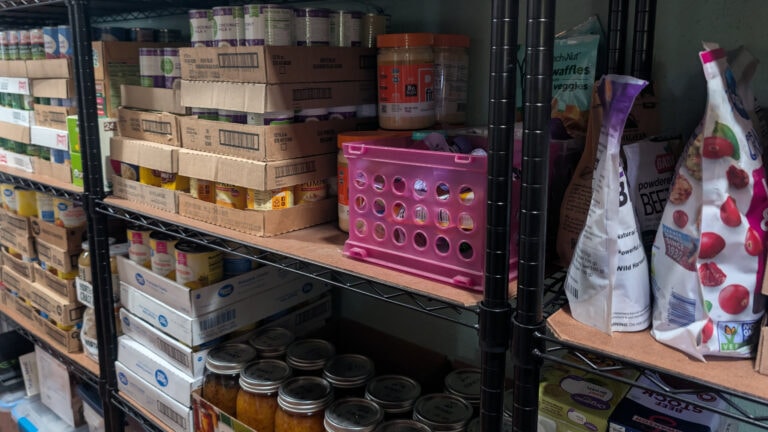
If you can purchase something in a large quantity, then the savings can add up fast. This can extend well beyond the 50-lb bag of flour or wheat berries and grinder. And you have probably already seen this in action with the things you buy.
If possible, we will purchase a larger quantity of an item. Take a package of razor blades. When a 4-pack costs $10, and a 12-pack costs $25, it makes way more sense to purchase the larger pack. You are going to use them anyway.
Most items you buy can be purchased in a large amount. The other day we were doing research on alternatives to soy sauce. The cost was much higher for the alternative in everyday small bottles. But purchased by the gallon, the costs were getting much closer to comparable.
The biggest catch is storage and shelf life. Most everything has a life. And Everything will take up space somewhere.
If purchasing the gallon jug of something removes a gallon of fridge space, I need to question how fast I am using that product to give up that space. I also need to figure out how long it will last. Yes, I can repackage and extend that life, but it’s not going to be perfect.
Do not buy things that will sit around and go bad before you can use them only to buy them in bulk. And do not buy things that will take up space when you don’t use substantial amounts of that item consistently. Save that space for something you use more instead.
In this video, we discuss the basics of getting started with food storage, which is a great way to start buying in bulk and preparing for the unknown all at once.
Avoid extra trips to the store
I don’t care how hard you try to stick to your shopping list, there will be times when you pick up something extra. Or something you forgot on the list.
But here is the catch, the more you shop, the more that you will get extras. And every single extra counts towards blowing the budget. A dollar here or a dollar there won’t seem like much. Yet it adds up really fast.
If you have the space, try to plan on doing major shopping once a month. Pick a single day and get it done. This will, of course, require some planning on your part to decide on meals. And it takes practice.
If you don’t have the space or instant budget, plan a single day per week to do shopping. And sometimes this is the better route to go anyway.
By planning your budget weekly, you get the opportunity to shop the sales. You do need to make sure that the sale is really a sale and not an item planned to draw you in. And you need to be careful. The more you shop, the more you buy.
Use a shopping list
No matter how often you visit the store, have a shopping list. Plan a budget for each trip and stick to it. Decide carefully on exceptions.
For example, our local Walmart has been recently reorganized. During this process, they have put on clearance sizable portions of the store. Fabric, clothing, and even food have been discounted by substantial amounts to make room in the store. So, we have made exceptions to our budget, allowing us to get items for a better deal than normal.
Grow your food
Much of the core vegetables and fruits can be grown and canned at home. The more you grow during the right seasons and store properly, the less you will need to purchase in the off-season when these things are expensive.

Sit down and plan out gardens based on what your family eats the most and what will grow the best in your area. We have lived in places where we could not grow certain vegetables. But we grew what we could and stored everything possible to stretch out the food budget.
Seeds are a cheap item to stock up on and easy to store in the off-season, so you are ready for the growing season. We prefer heirloom seeds when possible.
Cook from scratch
Food tastes better being homemade. I’m sorry. You can’t sell restaurant-made or boxed foods and claim it’s better. Sure, it’s nice to eat out occasionally. But homemade will always be healthier and less expensive.
When you buy a can of soup or a pre-made meal, you are buying the labor it took to make and whatever random “food” they put in it. Let’s say a boxed pizza costs $10. You need 2-4 to feed the family. Now you have spent $20 or more on a single meal.
Yet if you made the pizza from scratch, it would be much cheaper. Let’s say cheese is $7 for 2 lbs, dough costs $2 in ingredients, $1 for tomato sauce, and pepperoni is $5 for a pack. For $15, I have enough to feed everyone and considerably less junk.
Eating out is no better. It will cost me at least $25 to feed my family at a fast-food restaurant. Plus, I will walk away feeling under-full and not healthy. Instead of eating out, when we have places to go as a family, we pack our lunch or dinner. I spent a little money in advance to purchase lunch containers for each person, and we packed everything we needed in a small cooler.
Avoid junk food
You don’t need to always have a tub of ice cream in the freezer. And your kids certainly don’t need the most expensive sugar-covered cereal every morning.
Much of the convenience foods come with lots of processing and dirty ingredients. They also come with a big price tag unless you buy on sale and use coupons.
But let’s face it, your body does not need that junk to survive. And the more you can train your body to function on whole healthy foods, the better off you will be. Plus, you will spend less time trying to bargain shop for food that won’t get you as far.
Plan large purchases
Before you pull the trigger on anything large, take some time to think about why you need it.
Some purchases will be unavoidable. A larger vehicle so our family could all go to places together was a necessity. The latest computer or electronic gadget, not so much.
If needed, list out all the things you can think of as pros and cons. Do the pros truly outweigh the cons?
By putting in a thought process, you eliminate impulse spending. This alone can be huge in savings.
Sleep on it
When in doubt, sleep on it. Write down the details and then review them the next day, or week. Especially if you cannot purchase it outright.
When you step back from something, you give your unconscious mind time to do its work. Time to think it over and decide if you are willing to take on the burden.
Think about if something will not only bring you joy today but years into the future.
If it all checks out, then go for it. If not, maybe that’s a good sign you need to wait.
Have a household budget
One of our biggest things over the year has been to create a default budget and track our spending.
Because we have a business, keeping track of our expenses has been important. We need to know where everything is going and how we are spending our money. And this skill has spilled over into our personal life.
At the beginning of each month, our default list tells us all the bills that are coming up that month, what we anticipate coming in, and how much extra funds we should have. I will review that and update some figures, so we are ready for shopping and getting things paid as needed.
I have line items for how much fuel in dollars we plan on using, a space for non-food items, clothing allowance, and food budget. There are also sections for money I want to put into savings each month.
By sticking to our specified amounts, we know what is affordable and what is not. And as we purchase food and other items, I lower the remaining balance on those lines.
If you feel your budget is being run over by eating out or trips to the movies, it’s time to start planning activities at home. This article covers things you can do as a family that are off-grid friendly, so you can do them no matter where you live. You don’t even need expensive tablets and other electronics which is better for your family’s health.
You can use complex software, such as Quicken (or QuickBooks), go simple with an Excel spreadsheet, or do a written budget on paper. No matter how you do it, make the commitment as a family to stick to the budget you planned.
A working budget is also key when you first get started on your homestead.
A frugal life means working together as a couple
A budget is a shared thing. It’s not one person who earns the money and the other spends it. And it’s certainly not my money vs your money.
Go over your bills together. Decide what needs to go into each budget line. Work together to keep within the budget.
Buy used if possible
A used item in decent shape can cost considerably less than a brand-new version of the same thing.
Don’t get me wrong. There are times when you should buy new things, especially if they have parts that can break or wear out and you can’t replace them.

Yet you can find many large-scale purchases for reduced cost that have been lightly used.
When we moved into our current place, we needed a washer and dryer. As a new set, we were looking at $1400. Instead, we found an older used set for $300 in good condition, put in $100 worth of parts and they work great.
They might not last as long, but who knows? So far, I am a year in with an average of 12 loads a week for our family of 7.
Someone else we know purchased a brand-new set, and the dryer did not even last a year before total failure. They didn’t even get all the money they had dumped into that new one and still had to buy another.
There are always cheaper options out there if you keep your eyes open.
The same can be said for clothing. I could not even say how many times we have gone through a secondhand shop and found brand-new clothes with tags for a fraction of the original price.
Look around everywhere you can before you drop the cash to buy new. It might surprise you at what you can find. Even things like books can be found used for a fraction of their original price.
Conclusion
These six concepts should get you pointed in the right direction. Living frugally doesn’t mean living cheap, or poor. Rather it means being a wise steward of the things you have so you get the most out of them.
Over time we have saved thousands while maintaining the lifestyle we enjoy. Sometimes we don’t have exactly what we want. But in the end, living a homestead life means you can get by with much less.