If you talk to the average prepper about what you need, one of the first things you will hear is guns and food. Admirable preps for sure. But what do you do when ammo is impossible to get?
Many years ago, people did not run to the store to get the things they needed. The general store of yesterday was certainly not the Walmart of today.
Times have certainly changed.
The General Store
In most small towns across the US, the general store was a key part of the town. While often not well stocked, they got in various key items that would have been more difficult for you to manufacture on your own.
As the industrial era took place, the store carried tools and was your go-to place when you needed parts for your equipment that could not be produced locally.
The best general stores brought communities together. What one farmer produced could be sold to the general store and then the general store could connect that product with another community member.
As time went on, more items were pulled from surrounding communities. General stores became a local hang-out, many with soda shops. Once mass manufacturing took over, individuals stopped producing essentials in their homes. Things like clothing and eventually core essentials such as food.
And the supermarket was born.
Shutdowns and Grid Downs
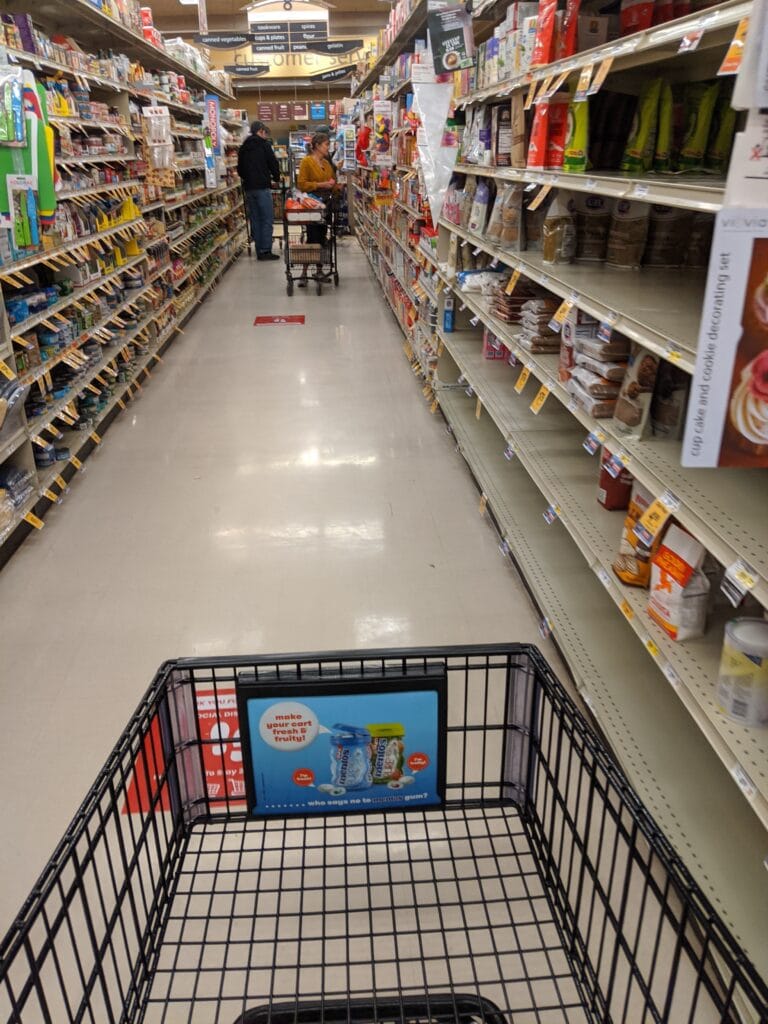
But there is a problem with the supermarket.
In 2020 when everything began its swift shutdown, the fragility of the mass-produced economy was exposed. Without massive back ends moving goods, keeping factories open, and people stocking shelves, panic ensued.
People no longer had the ability and knowledge to produce key needs for themselves. The convenience of walking into a grocery store and getting everything you needed was gone. Sure, some had gardens. Others still had livestock. But if you were a city dweller, you were left questioning if you could get anything you needed.
And this problem is the exact reason you need to expand your concept of prepping. Because whether it’s a government-controlled shutdown, plandemic, or a nuclear attack, the existing supply chain is extremely fragile.
It’s great to have a year’s supply of food. Or the most rolls of toilet paper on the block. But when the grid never comes back, how are you going to get food?
The notion of being self-sufficient and off-grid is fake
Just as the general store became popular and grew with each small town, you need the same in your community.
On the old-time homestead, each farm did not endeavor to produce everything themselves.
You have seen it in the old movies where mom sends the kid next door to borrow a cup of sugar. Or in one of my favorite classic Christmas movies, Emmet Otter’s Jug-Band Christmas, Momma Otter borrows a spinning wheel from her friend, the Muskrat.
We need each other to survive. It’s not you and your preps against the world, but rather you and your neighbors are against the outside environment.
It’s absolutely essential that we take the time to build a community of individuals with skills that can help each other survive in the long run. Not just living off our preps but truly surviving and growing together as a community.
Alternative preparation ideas for you to bring to the table
Everyone has food. Most have guns. Toilet paper is great, but leaves will do in a pinch. Yet what’s covering your back? Or how about getting fresh meat on your table without having land or animals?
Clothing & Sewing Skills
Clothing is something that gets missed in preparedness. While we are salivating over the latest solar grid, or trauma kit while polishing our favorite 12-gauge, clothing is the last thing on our mind.
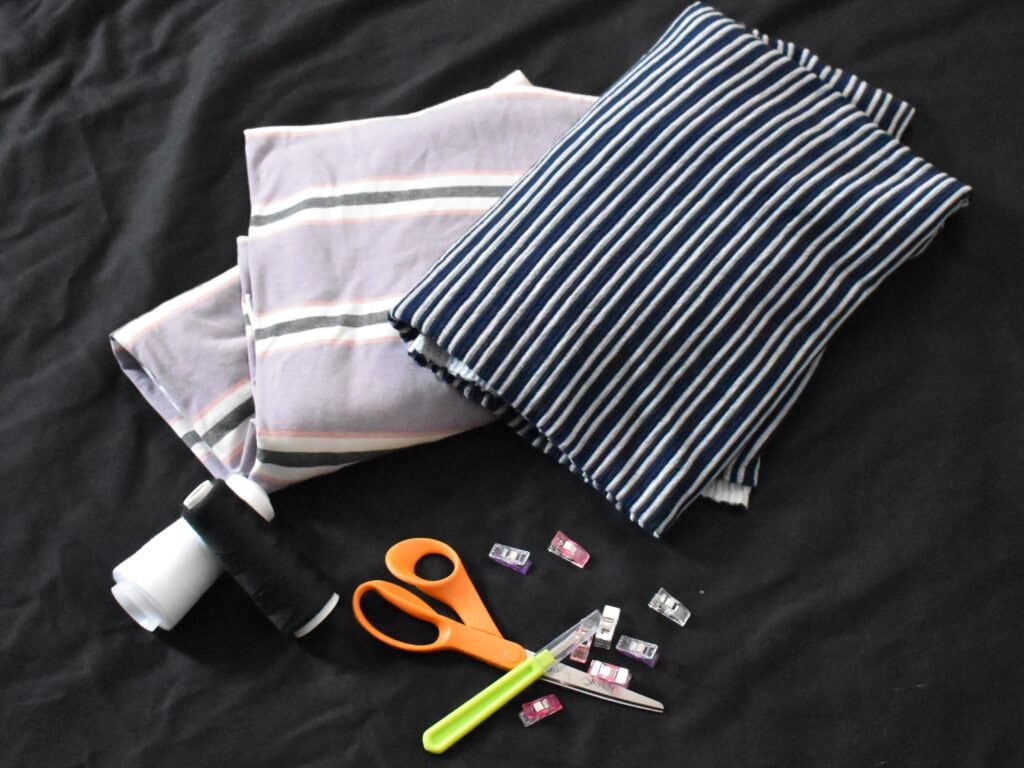
Sure, you can stock up on extra pants. How long will that last though? Not too long ago, I blew through 3 pairs of pants in a few weeks. Working in them constantly, which is inevitable living on a farm, wore them out quickly.
Instead of going out and buying 50 pairs of pants, go out and purchase fabric to make pants. Get a pattern and sewing machine. Learn how to make your own clothes or at minimum, how to repair what you have.
For years, the normal was not mass-produced clothing. In the early 1800s, most garments were produced at home. It was not until the late 1800s that more clothing started to be mass-produced, primarily due to the abundance of cheap labor from immigrants needing work.
And even then, there were more fashion-style outfits and women’s clothing than anything else. It was not until the early 1900s that mass production really took off.
A skill that would be easy to bring to your small community is sewing. If all you can do is trade and barter, skills could become more valuable than gold. If you can produce clothing, you have a place in your community where you can keep food on your table.
A few of our favorite sewing pattern websites are Maid for Mermaids and Peek A Boo Patterns.
Traditional hunting and archery
The farmstead of yesterday did not go to the grocery store to buy a pack of plastic-wrapped meat.
Black powder, lead and guns were expensive. A Springfield rifle could set you back $20 in 1860, or nearly $800 today. It seems like it’s not a lot, but considering your annual wages could be as low as a couple hundred a year, that $20 bucks had to pull weight.
Your farm needed to produce enough meat to feed your family. And if you killed all your livestock, that was the end. Instead, you turned to trapping and field hunting.
Tools of trade would often rely on classic hunting traps and bows. Ammo and powder were saved for times of great need and defensive purposes.
Today, while bows are more sophisticated, they are just as effective at hunting wild game and keeping meat on the table.
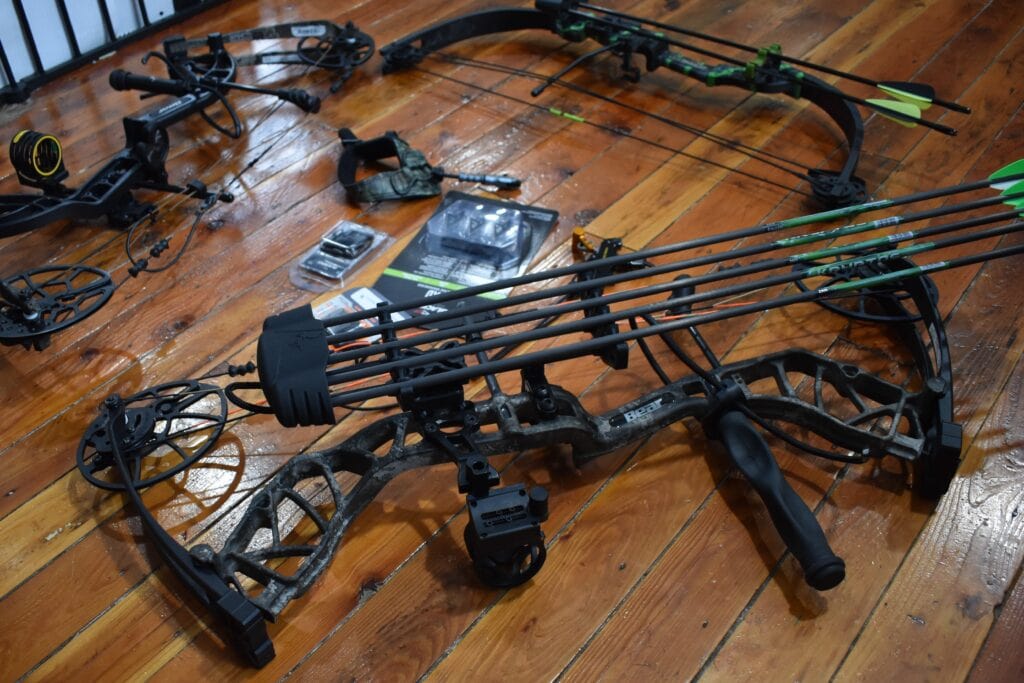
One of the alternative preps we have focused on recently is classic bow hunting. We started with decent-quality compound bows for both me and my wife. Not only purchasing the bows but the additional tools to practice, arrows, and items needed to maintain them.
Sure, a bow might not win in a gun battle, but I can reuse an arrow way easier than reloading bullet casings or even purchase ammo which in some formats is hard to get.
Plus, there is a bonus to bows and arrows. You can purchase a bow without undergoing screening. Given the prevalence of government oversight around guns, it’s possible for someone to learn what you have through legit or nefarious means. How long until a database listing all gun owners is hacked and exposed?
If you learn how to hunt classically using traditional tools such as bows and traps, you have a skill that will keep meat on your table and provide trading items (furs, meat, etc) for your community.
Our favorite brand of hunting bow is Bear, because they are USA-made. And don’t forget supplies like conditioning wax to keep your strings in good shape or a field bow press to make repairs.
Books & Knowledge
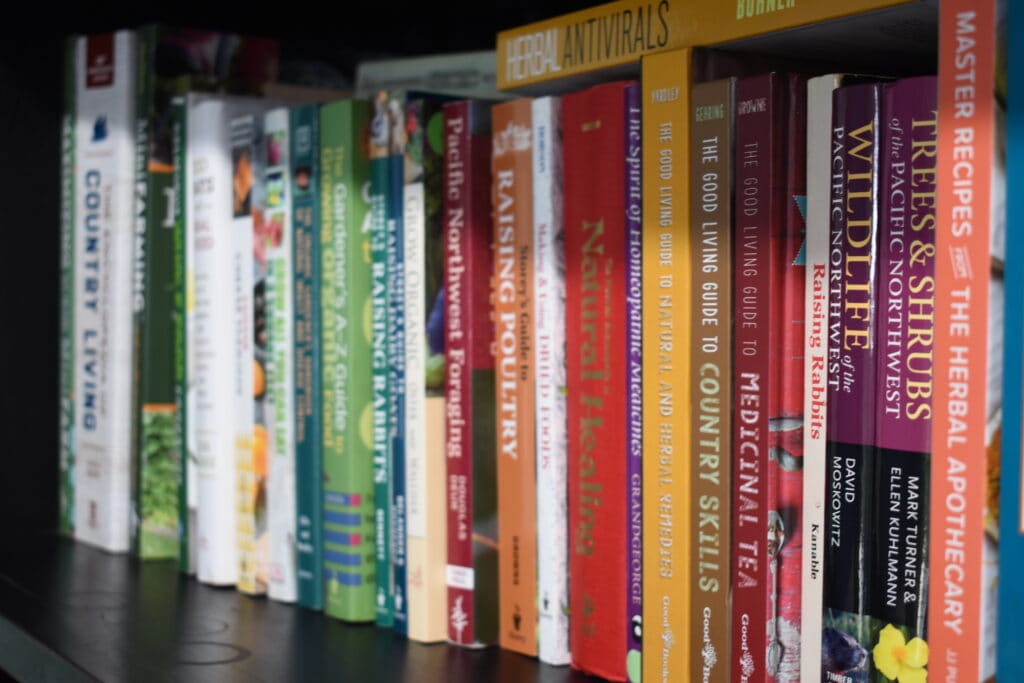
Books are easy to come by. They contain everything from skills you should learn to entertainment.
It’s impossible for the human brain to remember everything. As a race, we are only as advanced as we are today because of our ability to pass the knowledge we learn from one generation to another. Books are the key to that growth.
The ability to store knowledge (and entertainment) is key in a grid-down scenario. You won’t have access to YouTube to learn the skill you are looking for.
There is a reason the wealthy of the past had libraries in their house. It was a sign of status to be able to hold knowledge. Even if no one ever read them.
In your community, knowledge that you can store could prove essential.
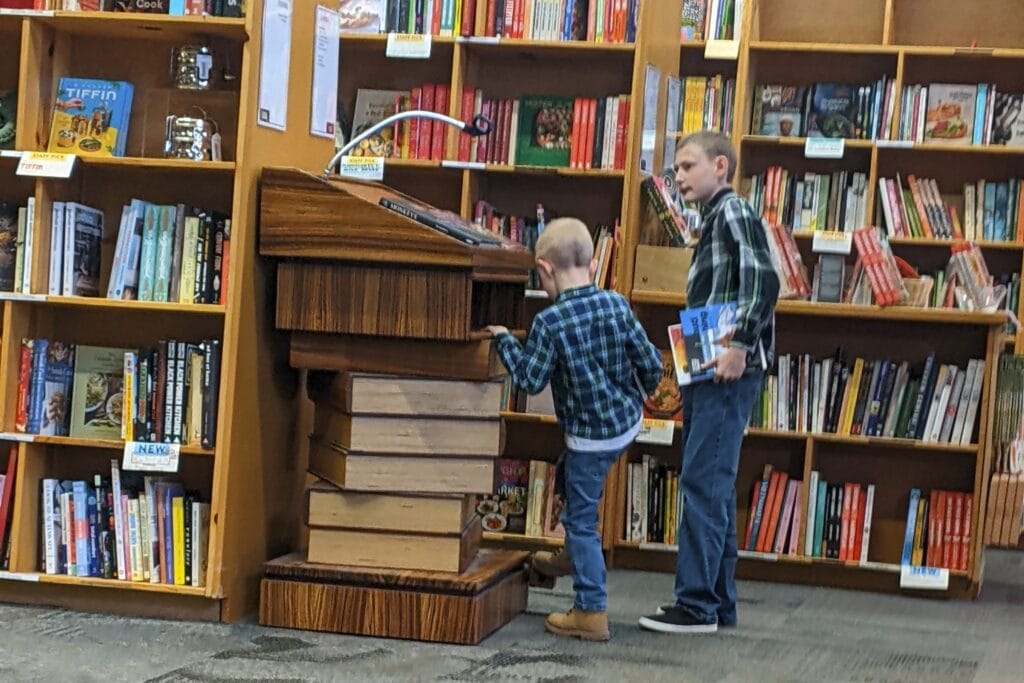
Let’s say you chose to create a small library of books on medical skills. While you might not directly need to know how to perform surgery to heal a sucking chest wound, if someone gets shot it could save a life.
Even simple books like children’s novels that help them learn to read, or science fiction to let your mind escape for a few minutes each day.
Books hold the key to the past, and skills for the future when you have no other means. And they won’t disappear with the push of a button.
A few favorites we have picked up for ourselves and our children are the Redwall series by Brian Jacques, The Chronicles of Naria, The encyclopedia of country living, The doable off grid homestead, and Master Recipes from the Herbal Apothecary
Traditional tools & skills
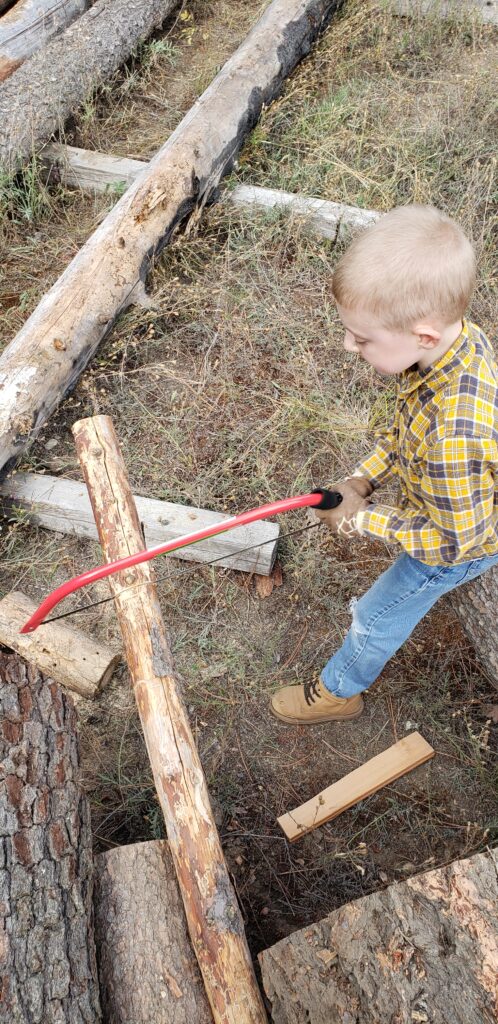
A chainsaw is a great tool. With it, you can chop down a tree in record time and turn it into rounds ready to throw into your gas-powered wood splitter. But what happens when you run out of gas?
Homesteads of the 1800s did not rely on a chainsaw to chop down a tree. Manual labor was far more common.
And in a grid-down situation, those traditional tools and skills will become even more valuable. Gone will be the power tools and the classic hand tools will reign again.
What kind of tools can you work on acquiring beyond the basic hand screwdriver or ratchet? Think two-man saws, classic wedges, axes, planes, and other tools to work and shape wood or metal.
A common and important figure in small towns was the blacksmith. Not only could a blacksmith make tools out of steel, but they could also shoe working animals such as horses.
Could you take an interest in learning to work metal or classic ways of working wood by hand?
The best way to know what tools you need is to learn the skills to do a specific task. Granted you might not be a carpenter, but you could start small. Gather the tools and produce a greenhouse or trellis in your yard using no power tools or modern conveniences such as screws.
A bow saw, splitting axe, and splitting wedges are a good start for creating a wood heat stockpile.
Find alternative ways to make yourself valuable
Everyone can do the basics. Anyone can come up with a list of 100 key items you should stockpile.
What is more valuable is creating communities. Working together. Learning from our history and bringing back those skills that have been lost to the ages.
What alternative ways can you make yourself valuable to your family and community?