Homestead security does not end with strong fences for the livestock. As homesteaders, we often spend large amounts of time outside keeping the animals in, yet not enough time securing the wide-open pipeline leading right into our living rooms. The internet, left unchecked, has more power to ruin a homestead and family that almost anything else.
Family preparedness is not just about surviving the collapse of the world; it’s about surviving and thriving in everyday life. Unfortunately, the world is full of evil living on the other side of a wireless connection. Pornography, internet scams, and identity theft are running rampant.
Yet with a few changes and healthy dose of internet discernment, we can protect our entire family. This goes far beyond protecting a spouse from online gambling. It comes down to safeguarding the most valuable parts of our homestead: our children.
Building a digital fence in your home
No matter how hard you try, you can’t watch every screen or device every second. More importantly, your children will eventually grow up and move out. Instead of absolute security, you need to teach active discernment.
I spent years fixing computers professionally. And I would say probably half or more of the computers that come into the shop were there because of an infection. With so much out of the web, it’s nearly impossible to block it all manually. Your homestead internet fence needs to be built in layers.
Just as we place small rabbits in a cage and then defend the cage from coyotes with an electric fence, you need to double your digital protection.
At the router level, you can use automated DNS filters to block known malicious sites from ever entering the home. Once the perimeter fence is up, then it’s time to teach your kids how to identify and avoid topics that should not be in their lives.
Creating a secure network with DNS filters
CloudFlare Family, CleanBrowsing, and NextDNS are all free or low-cost services you can employ at the router to help block malware, scams, and pornography. These services stop the devices on your network from translating a bad website’s domain name to the server address, effectively cutting off those sites before they ever load.
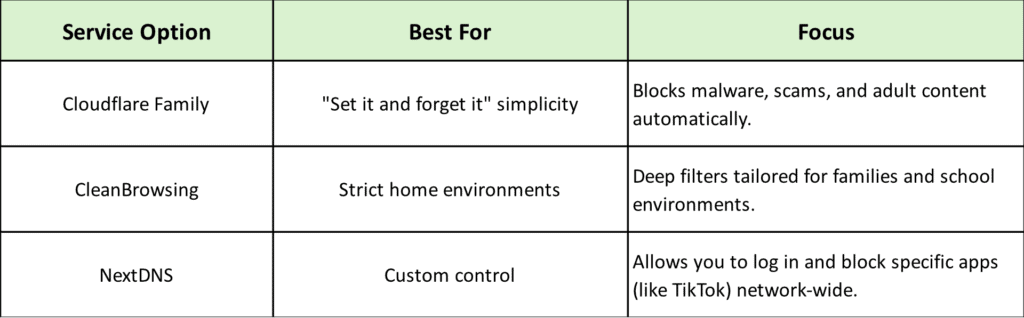
We use CloudFlare Family with their free 1.1.1.3 service. It’s free, reliable, and also very easy to configure. If you want more granular control over the services, then I recommend the other two options, which are generally run as a paid service.
Teaching your family internet safety
Addressing heavy topics like pornography, internet bullying, and scams by teaching what they actually are might seem risky to some parents. It might feel like you are intentionally exposing your children to a hazard that might make them more curious.
But look at it this way: You are also teaching them your standards and explaining the right way to deal with it when a friend, classmate, or rogue email throws it in their face.

As our children reach a mature enough age to be online for school, we make it a point to teach them about things that are on the web. Not just the bad, but the good. They need to see that, like everything in life, technology is a double edged sword. Our family’s foundation in Christ serves as the guiding beacon for deciding what is right and wrong.
What we teach our kids now will stick with them forever. Teaching good internet safety will keep your family protected today while under our roof and once they leave home, where our router security no longer protects them.
Family safety starts with adults
It’s a sobering fact that many adults get caught up in the digital traps just as much as kids do. Beyond pornography, there is internet gambling, addictive online gaming, and sophisticated phishing scams out to harm us or our household.
Not that long ago, I read a story of a husband who got sucked into an online role playing game. In the game he had a virtual wife, kids, and even a job! It seems harmless on the surface until that digital alter-ego started taking over his reality, eventually leading him to try and meet up with the real-world woman playing his virtual wife’s character.
Our internet habits have the power to uplift or completely destroy our families. By practicing keen discernment about what we do and view online, we can continue to strengthen our homes rather than tear them down.
Adults engaged in questionable activities online are opening the floodgates to the children in the house, even if they don’t realize it. Modern tracking algorithms will begin serving explicit or dangerous advertisements to a child’s tablet simply because someone else on the same Wi-Fi network viewed a sketchy site one time.
Digital safety goes beyond bad sites
Facebook, Instagram, Tik-Tok, and X seem harmless enough on the surface. It’s just connecting with friends, right? The truth is often much darker. We have to decide if our families should even have social media and all the baggage that comes with it.
Teens and young adults easily fall into a trap of cyber bullying. Either by attacking others or being relentlessly attacked themselves. What starts as a simple disagreement can go much farther online. Human empathy takes a back seat when we become a keyboard warrior. Worse still is the engagement tools built into the platform seem to intentionally amplify conflicts.
Teaching your children how to handle antagonism online and maintain respect towards others is a critical first step. While it won’t fix the millions of adults who happily bash each other every election cycle, it makes a huge difference in your little corner. And could even save someone’s child or yours from going down the tubes of despair.
Avoiding the ‘doom scrolling’ trap
Algorithms are designed intentionally to keep you on the platform. They don’t want you to leave.
Those 50 videos on cats you just watched? Yep, the algorithm intentionally showed you those knowing what you like. It was banking on you hanging out longer and longer. And it won.
What we often don’t see is the massive amounts of time lost. One video turns to three, and then to ten. Suddenly twenty or thirty minutes of our lives are completely gone.
Most devices have built-in tools to limit the amount of time spent on specific apps, and I strongly recommend you use them. I maintain strict limits on social media apps myself. Even with the best of intentions, it’s easy to mindlessly waste time while waiting in line at a store. We all can fall victim to the algorithm.
Securing your privacy in a transparent world
Insecure social media and explicit sites are not the only risks in an online world. Every day we are requested to send our information into the world. Sometimes it’s something simple, like an Amazon order. Relatively low risk. Other times the stakes are much higher. Online banking, for instance, can expose your entire financial security if not handled with cared.
Here is the golden rule of the internet: Anything that is shared online stays there. Forever.
I can look right now at exactly what our business website used to look like fifteen years ago. I don’t even own that site anymore, but the digital archives are permanent. Personal information like social security numbers, bank account details, and even addresses can and will be used against your household if the data falls into the wrong hands.
Checking carefully where you are logging in and ensuring the site is trustworthy is critical. ‘Phishing’ attempts fool into thinking a fake site is legit, often by mimicking the exact appearance of the real site. Paying attention to the URL in the browser address bar is the right one is your best first line of defense.
Photos are permanent
If you put a photo online, assume it’s stuck there forever. Teaching your children not to share private photos of themselves with others is absolutely critical.
What may start as a headshot could easily turn into something dangerous. No matter how much an online friend reassures them that a photo won’t ever be shared, the moment a file leaves their device, all control is lost. We teach our children that anything they give up digitally is gone for good. Photos taken cannot be taken back.
Creating a digital root cellar
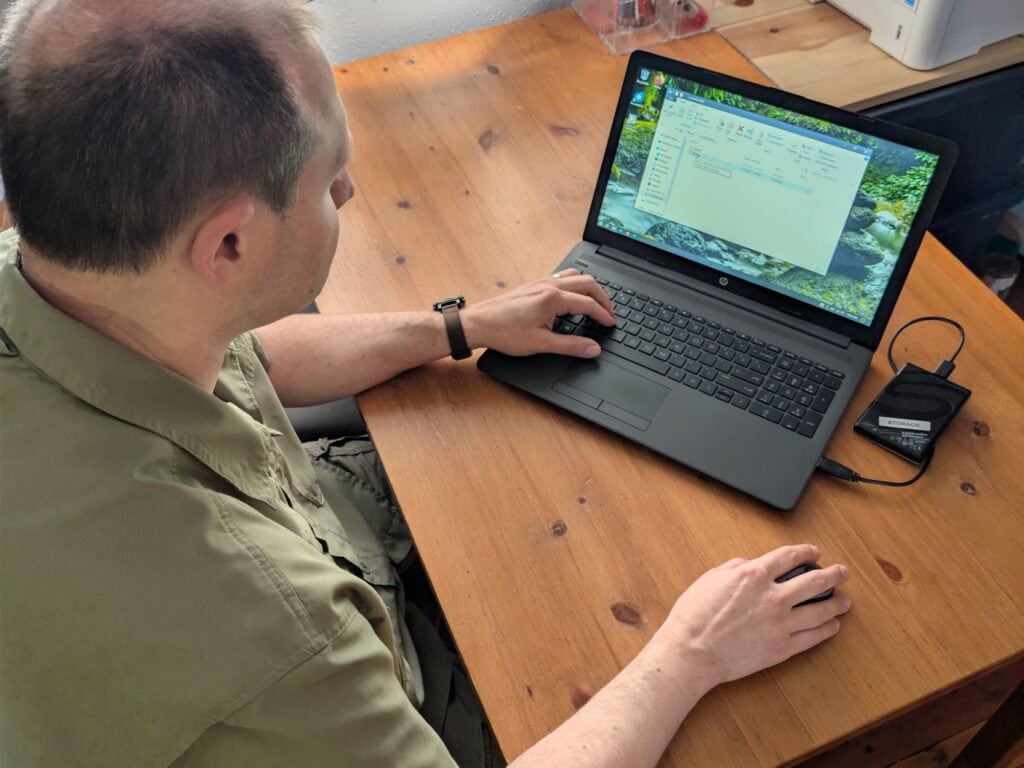
While it seems great to store everything in the cloud, there are some inherent risks that come along with it. The moment your data leaves your homestead, it’s vulnerable. If you store lots of personal data online, a hacked cloud provider could compromise your family’s identity or security.
A good rule of thumb for personal records is to store them locally, with encrypted backups stored under your roof. Our guide on creating a digital vault walks you through the process, which is a crucial part to overall family preparedness.
The fewer footprints you make in the digital world, the safer your data can stay. Being truly prepared means looking ahead and thinking about the ‘what-ifs’ before they happen.
Digital Safety is Everyday Preparedness
Being safe online is not about living in fear or completely avoiding the internet. It’s about learning to recognize and avoid the pitfalls that have become so common in modern society.
With the advent of advanced AI tools, technology is moving faster than ever. We are seeing more rapid security vulnerabilities emerging now than ever before. The vulnerabilities are not new. It’s that AI has empowered the bad actors to find the holes faster. To create ever more convincing ways of deceiving us.
No longer are we facing easily spotted scams from a foreign prince. We are facing complex cyber criminals, automated identity theft, and deep fakes. Or even worse, predators hiding behind apps to butter up our kids to do something they shouldn’t while chatting over social media.
The easiest cure is to teach secure and safe browsing habits. When every member of your household uses the internet safely, the whole family wins. Creating an intentional digital boundaries plan in your home keeps your kids safe no matter where they are. Today and in the future.
Exposure on the internet is controllable with perimeter fencing. It will keep the worst stuff at bay. But even the best fence fails when you leave the gate open by failing to teach your family how to navigate the online world safely.