Homeschooling your children is a big undertaking. And the last thing you want to do is add yet another subject to overwhelm your kids or even yourself. So where do you fit preparedness training in the busy school schedule? Everywhere actually!
Homeschooling and preparedness do not need to be separate adventures. The very life skills you are teaching your children and preparedness skills you want them to have actually go hand in hand.
Preparedness is not about doomsday like so many think. It’s not about a world ending EMP (Electromagnetic Pulse) but rather being ready for the everyday hiccups in life that we all face. When you choose to homeschool your children, it’s not about making them study for hours on end. It’s about giving them a well rounded education.
Instead of adding another subject “Preparedness Skills” or some other fancy name, you just need to realize that you can teach preparedness when cooking. Preparedness in a math lesson. And preparedness when someone skins their knee during nature walk to collect leaf samples.
Making preparedness skills part of daily education
Stepping away from structured lessons and into life skills can feel a little scary the first time. Are we giving our kids enough school to make it in the world? The truth is we are doing that and more.
When we think about practical skills and how we naturally use them everyday, we quickly realize we want our kids to have that same practical knowledge. For example, the last time you doubled a recipe, you used math. Cooking with your kids passes those same math skills down the line.
Preparedness skills can slide into daily learn just as easy. During a science unit, you teach your kids how to make a basic water filter. Not only did they learn the science of filtering water, but a way to prepare for outdoor adventures or even be prepared when the water system breaks down.
Homeschooling life skills are easy to build with simple core subject to preparedness conversions. These are just a few examples of the many ways you can change core subjects into everyday preparedness lessons.
Science to survival skills
I already mentioned a basic water filter. But we can go so much deeper. Nature studies and plant identification teach children how to survive in the wilderness. You can show them edible plants, poisonous mushrooms, and even helpful medicinal herbs. Every day we are surrounded by nature’s bounty. Teach you kids how to use it.
Another easy lesson is fire building. Teach your kids how build the fire and read the color of the flames. Go on a scavenger hunt to see what items around your house are useful to create a fire.
Math from the pantry
Cooking is not the only way to bring math into your daily activities.
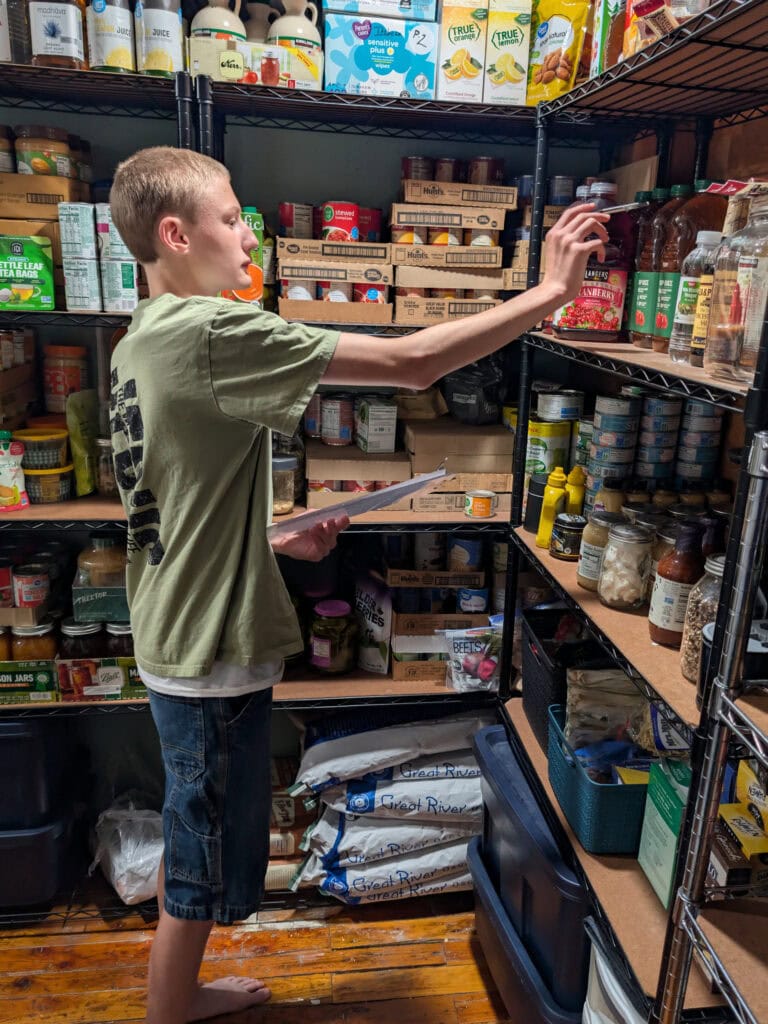
Pantry inventory counts for younger kids as core math such as addition or subtraction. Older kids can be taught how to calculate calories in a meal, creating rotation ratios, and even working with dates, space measurements, or volume calculations.
Physical education to nature walks
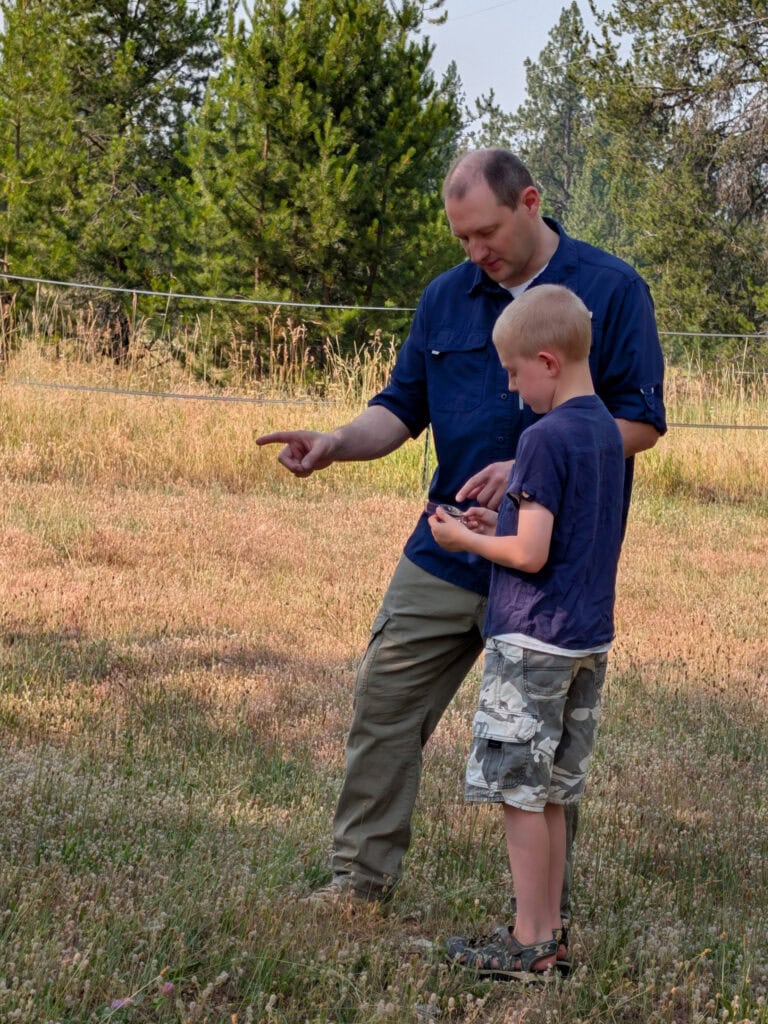
Teaching your kids how to use a compass and navigate counts as a preparedness skill. But that same walk through nature counts as a PE activity.
Learning how to prepare backpacking kits, what weight to carry, and practice hikes also count. They are time spent learning how to keep the body active through life, what our muscles can do, and how to take care of ourselves.
Language arts in plans and communication
Writing papers and learning spelling words are a pretty boring way to learn. However, you can drop the boring books and have them write the steps to call the neighbor over the radio, or do practice ‘presentations’ over the radio to get comfortable with public speaking.
Reading time might be as simple as given kids a book on wilderness survival or preparedness and letting them read over the topics they are most interested in. Have them jot down a few notes along the way of what they felt was most important. Complete the learning loop with a short talk on what they learned.
All homeschool subjects can covert to preparedness
No matter what the classroom skill, there is likely a real world use or example you can provide. For every skill you told yourself in high school you would never use, there has been at least a few you found extremely useful later.
The key is to let learning come through interest and adventure. Preparedness is not about book work. And your kids education should be less about cramming information in, but rather let them guide you to what interests them the most.
Adding homeschool preparedness without stress
Preparedness is not going to replace all your school efforts. And it shouldn’t.
Pushing prepper skills is the exact kind of attitude that will lead to burnout. Everyday is not a drill day. This is certainly not basic training and we are not creating mini-soldiers.
Instead pick fun activities that you can include with the daily lessons. Or a quarterly project unit that hooks into a preparedness skill, such as growing a garden.
Practical Fridays
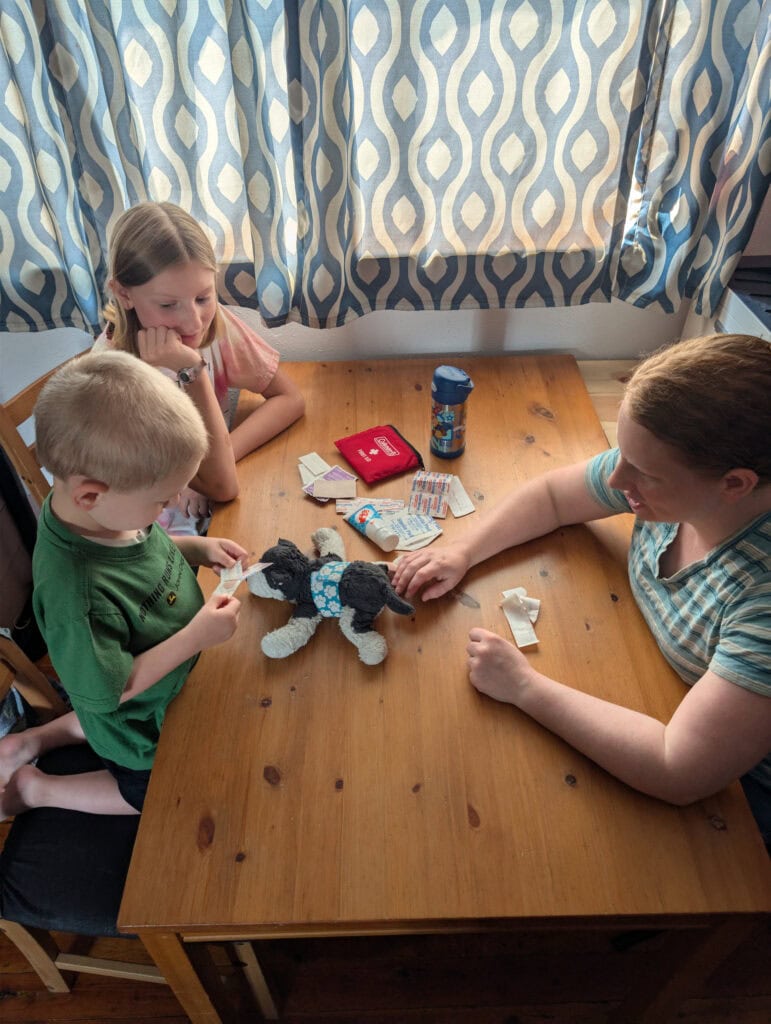
Choose a few hours on a single day of the week to discuss or practice deeper skills, like first aid. Make these type of lessons very hands on. Waste a few band-aids on a teddy bear. Or take a tour of the local fire department.
Use these hands-on times to break up a long week of book work. They should be fun with a core thread of learning a useful skill. You could even do a lesson on breakfast muffins. Nobody ever said life skills had to be boring.
Micro-prepping daily
Just like many of us spend a few minutes reading our scriptures daily, you can add a few minutes of preparedness to the daily lesson schedule. A few minutes spent create massive gains.
Maybe just after you do the Pledge of Allegiance, the kids could take a quick run to find one type of plant, or send them on a race to the gas shut-off valve and back. PE and practiced memory of the key shut-off in 5 minutes or less.
Teaching your kids to carry and use a simple everyday carry kit is a great way to do micro-prepping and help them gain responsibility at the same time. If your kids don’t have a EDC kit, learn how to make one without Simple EDC Essentials guide.
Seasonal projects
Large projects can be wrapped into preparedness and homeschool lessons too.
Going beyond the basic example of gardening I gave above, wood preparation for winter can turn into a large lesson and PE. Teach your children how to collect the right types of wood for burning inside, how to identify pests that can damage supplies, or even how to clear space around the house for wildfire protection.
Readiness changes through seasons, and there are many lessons that can be created around those needs. Winter snow brings lessons on ice patterns and water filtering. A power outage can turn into a unit on electricity and where our power comes from, along with making alternate forms of power generation.
Keeping the kids interested starts with age appropriate activities
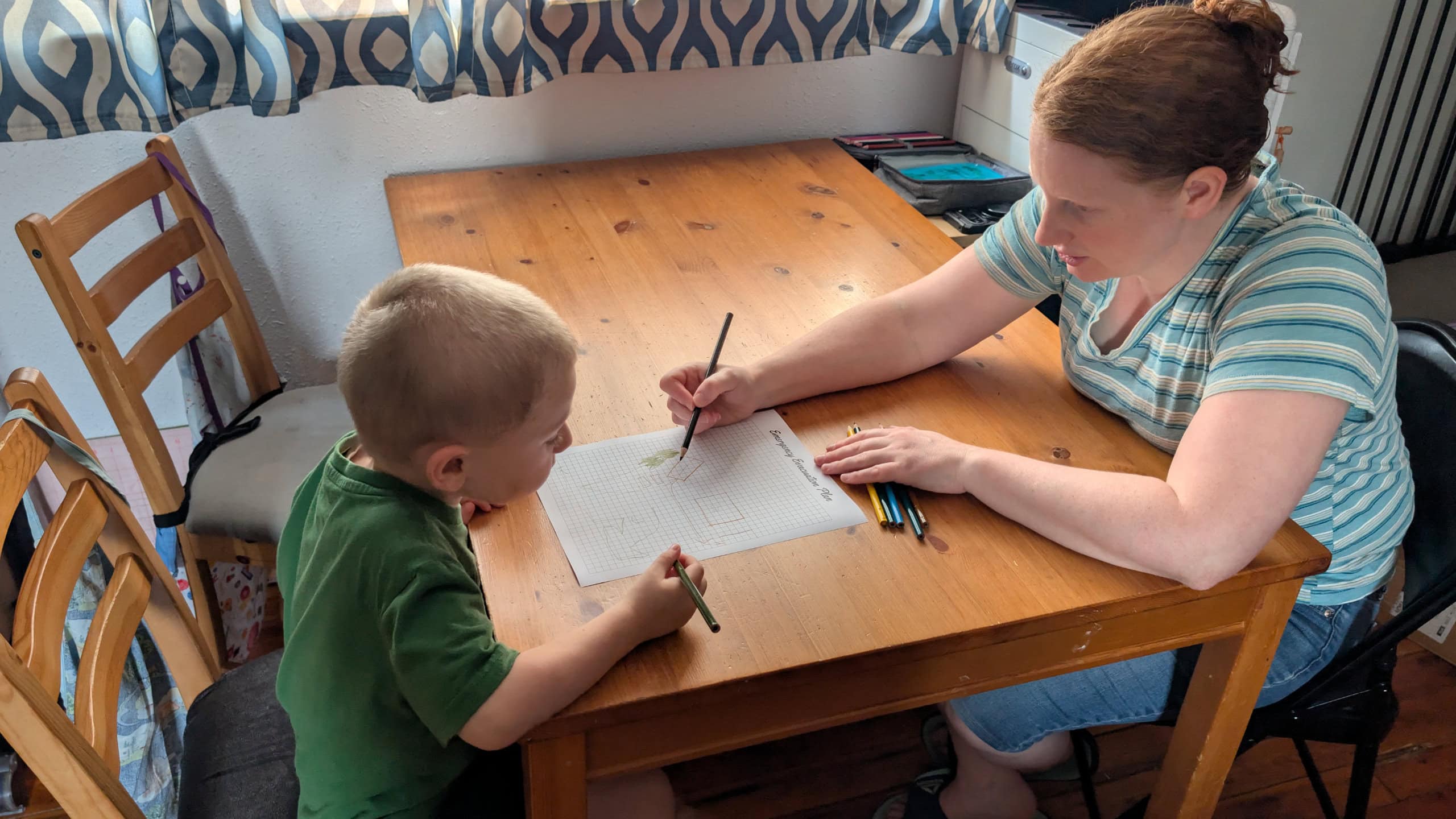
My four year old will never retain how to build an off-grid water filtration system. His focus is all about John Deere tractors. And it’s highly unlikely that my teenagers will want to draw a crayon map of the house.
The number one reason our kids tune out of school work is boredom or overwhelm. If we keep our lessons on their level, they will actually learn the skills we are trying to teach them.
Ages 4-7
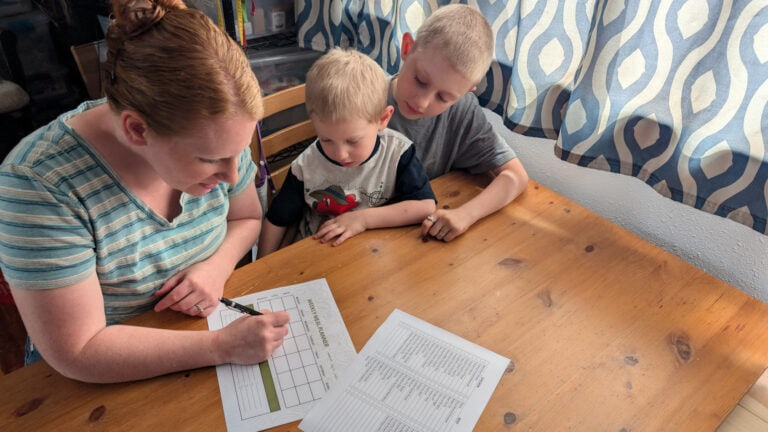
Kids in this age range are our observant helpers. Simple things like the crayon map will keep their attention for a short while. And that’s all the attention span they have anyway. Helping them memorize adult phone numbers or their home address is still a key preparedness skill for their age.
Ages 8-12
This age range is our operators. They can complete many tasks with adult supervision. The key here is the provide them opportunities to build independence.
With a little guidance, they are more than capable of preparing emergency bags, learning radio operations, and even pantry rotations. These skills can easily tie back to daily lessons without overwhelming them.
Ages 13+
Our teens are the most capable group and as such, should take on more responsibility. Our system leaders should be placed in roles of responsibility that will place a slight tax on them. This will help push them into growth. Without a push, many of us (kids included) will never step outside our comfort zone.
Have your teens help with your bi-annual homestead reviews, calculating loads to hook to a generator, meal preparations, and even vehicle repairs. A small look over your shoulder occasionally at the tasks they complete gives them freedom to succeed while you can still jump in to help when things start to go sideways.
If you have not started doing bi-annual reviews, check out our guide on homestead upkeep and get your teens involved.
Raising capable adults, not prepared kids
Preparedness is often hiding in the daily life skills we should know as adults. Simple things like how to change a tire can save them from being stuck on a back road. Or starting a fire while camping.
It’s a known fact that a young brain can absorb more information easily. When you provide opportunities for your kids to learn these skills during your homeschool lessons, you are setting them up for long term success. Not just academically but for whatever life throws at them. You are making them truly prepared.
When the skills are naturally integrated into the daily lessons, fear no longer becomes a driving force. We are not preparing for doomsday, it’s just another Tuesday on the homestead. Calm, confident kids turn into capable adults.
What preparedness skills do you want to teach your kids and what is stopping you from adding them to your daily lessons? If you are worried about shoehorning preparedness into a full homeschool schedule to meet the state regulations, step back and see what skills you can directly replace book work with.
Remember, you are homeschooling, not doing public school at home. Change the script and teach what you want your kids to know as adults.
Preparedness skills and homeschooling go hand in hand. It’s time we stop treating preparedness as another subject to teach and make it part of our daily growth.