
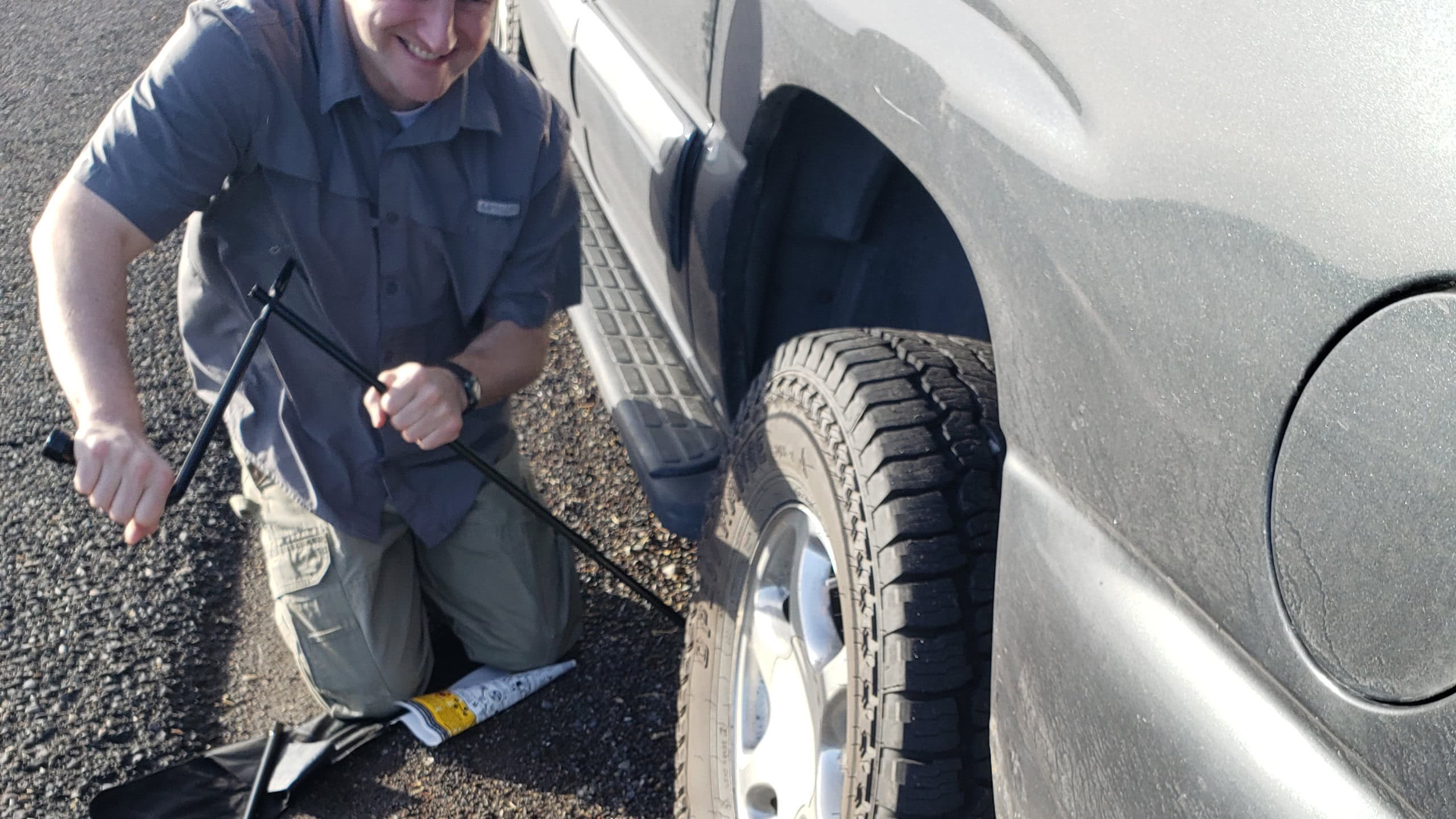
A few years back, we chose to make a family trip for Christmas. About halfway through our 8 hour drive, some inconveniently placed road shrapnel took out our tire.
We got off the freeway, and I proceeded to pull out the tools to change the tire. And that’s when plan A of swap to our spare tire went sideways. Despite having the spare down only a few months prior, the release mechanism failed. The spare tire was stuck firmly to the underside of our truck.
Plan B was to call for roadside assistance through our insurance. After attempting to request help, we were met with nothing. Time passes, kids are on the side of the road, and the situation is getting bad. Plan C is a call to the most local tire shop. They come, are able to free the spare and get us into the shop for repairs. Trip saved.
The problem wasn’t a lack of the right preparedness gear. I had a spare tire. I had a jack and tools. I even had the skills and knew how to change the tire. The problem came from a perfect storm of issues piling up and incapacitating my abilities. Emergencies will quickly block up our memory and abilities.
We never know what will happen. If we always expect our first plan to fail, it gives us the opportunity to create spare plans before we are stuck in a bad position.
One of the things I discuss in this week’s article is creating spare plans, and plans for when those spares fail. In the article it’s all about keeping your family safe and connected. And a special acronym, PACE. In random life it’s about safety in the face of unknown adversity.
You never know when A, B, and even C might fail you. You can’t just rely on a single plan. Or a single piece of gear. And certainly not a single skill.
Creating plans and backup plans help to remove fear and uncertainty from situations. And when fear is thrown out the window, it opens up more brain capacity for success.
Do your plans have plans? If not, I suggest you make some.