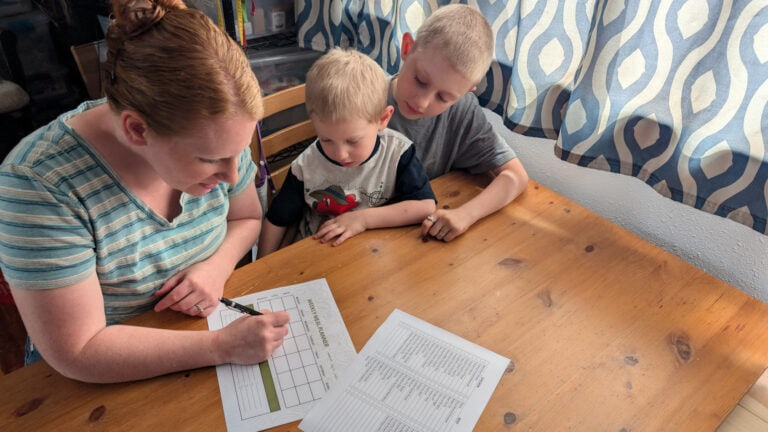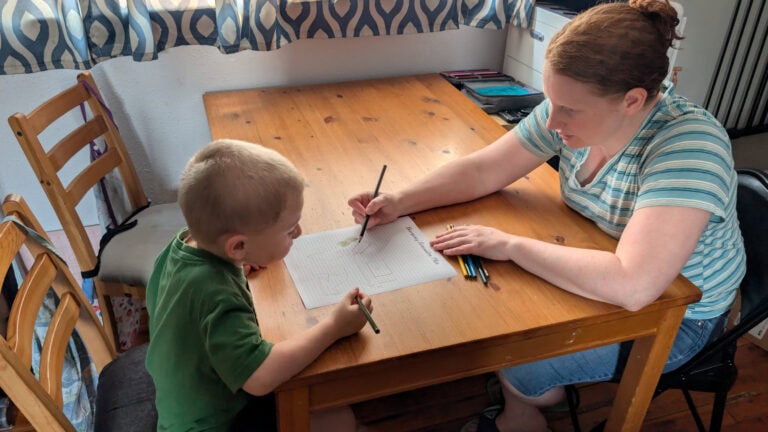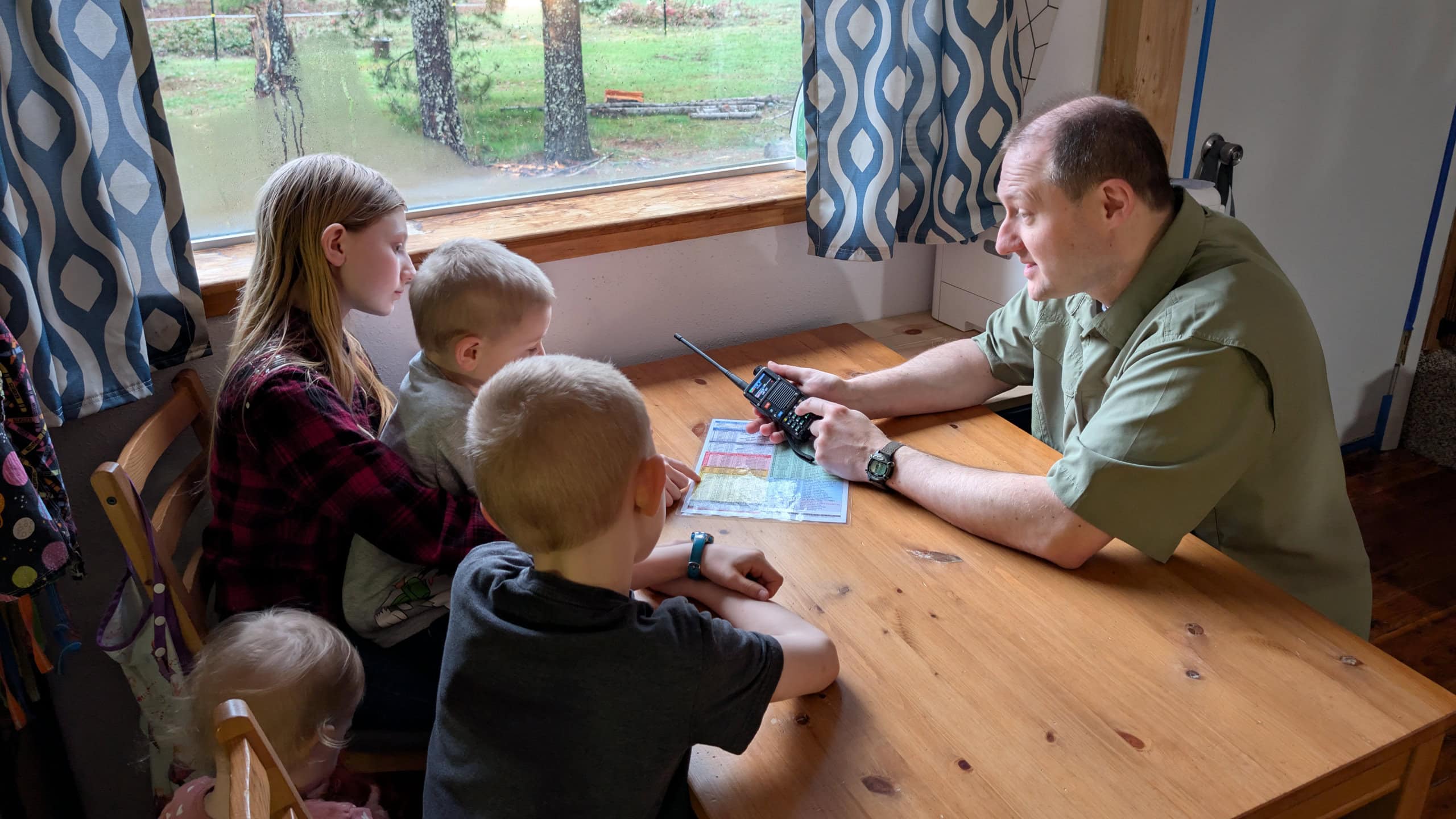
When most people think of preparedness, they think about the gear. Having enough gear keeps them safe, but the reality is gear amounts to only a small piece of the puzzle. Creating a plan for family communication is a priority since most families won’t be together 24/7.
Most real-world scenarios go down like this. It’s 2PM, and the weather alerts on your phone have been screaming at you all day. The entire area has been at risk for tornadoes and massive hail. Your older kids have been over at a friend’s house, having a play date. You’re stuck at work, and your wife is home with the baby.
Then it happens. A tornado touches down not far from your neighborhood. Panic could have set in. What do I do, how do I get home, will my family be okay? Yet your family spent time creating a communication plan and setting clear rally points.
While your coworkers sit beside you in fear, your mind is calm. Practice and planning conquer fear. The all-clear is sounded and you emerge to assess the damage. Cell service is non-existent. Your family communication plan in hand, you calmly grab the radio from your bag and call home, grateful to hear your wife’s voice and know everyone is safe and sound.
Without a plan, the silence of a cell phone would have consumed you. But because you took the time to build the plan, train your kids to use alternate communications, and prepared rally points, your family is accounted for.
Even short-term blackouts can wreak havoc with normal communications. Part of your power outage plan should include a full emergency communications plan.
The PACE method for an effective family communication plan
PACE traces its origins to the US Military and special forces, who had to assume that plan A would never survive first contact in battle, and backups needed to be in place. In the battlefield, if something didn’t go south, it was a miracle in itself. Trust me, even simple training never goes down without a hitch.
While life is not a battlefield, PACE can easily move into your communication plan. The PACE acronym stands for Primary, Alternate, Contingency, Emergency.
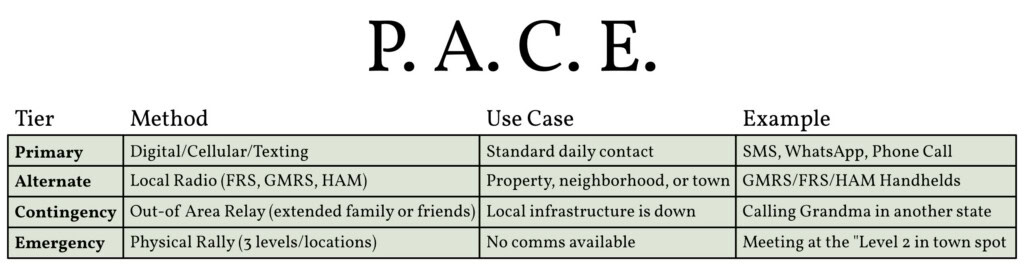
Primary – Cell phones & texting
Cell phones are a modern convenience with a critical flaw. They require a working infrastructure. During emergencies, that structure is often damaged or overwhelmed.
The obvious choice for primary communication is also likely to fail first too. Plan to connect with a voice call but quickly fall back to text messaging without photos. A simple text uses much less data and might squeeze through congested networks. Plus, some newer devices can fall back to satellite SOS messages.
Alternate – Handheld & vehicle mounted radios
The second line of communication comes in the form of radios. FRS, GMRS, and HAM radios expand your connect abilities.
FRS radios work great when the kids are just down the street. GMRS, with its ability to jump on repeaters, can take you even farther. HAM radios give you opportunities to call remote family members to let them know you are well after the event. To dive deeper into radio communication, check out this article on grid-down communication.
A strong plan needs to include pre-arranged frequencies, check-in times for long term outages, and fallbacks, including third parties who can help relay transmissions and information.
Contingency – Your remote contacts
When direct lines fail, however an outside connection is the right move. In a simple North Idaho example, for me to talk to my family over radio while I am in a different city will take a repeater or third party contact. The mountains block direct calls.
To protect from communication blocks, both physically (the mountains) or technological, designating a third-party contact that everyone knows to connect with saves confusion. If your third party is outside the disaster zone, they can collect and relay the details.
With a small network of relays (friends and family) everyone stays connected. And the best part is you can provide this service for remote contacts, creating a community network.
Emergency – Physical rally points
The last stage of your plan happens when all technology fails. If you cannot reach members of your family, instead of the plan failing, with nothing else to try, you fall back to a safe space.
Ideally you should have more than one location, with pre-defined parameters for choosing which one to fall back on. For example, in a house fire, the family knows instantly to fall back to the neighbor’s big tree (a level 1 location). In a flood, going to the local coffee shop on the hill (a level 2 location) could be a safe meeting space. For a tornado in the area, the rally point could be the gas station in the next town over (a level 3 location) after the all-clear is given.
Don’t discount your home as a rally point. Maybe in this scenario, Mom stays home and waits for the kids and Dad to return safely, maintaining the security and protection the home can afford.
Choosing your Out-of-Area contacts
Your family security is of critical importance. And so, choosing your remote contacts is equally important.
Whoever you choose needs to be deeply trusted in your family. Security can be compromised if the remote person leaks information, or you are overheard in the case of radios.
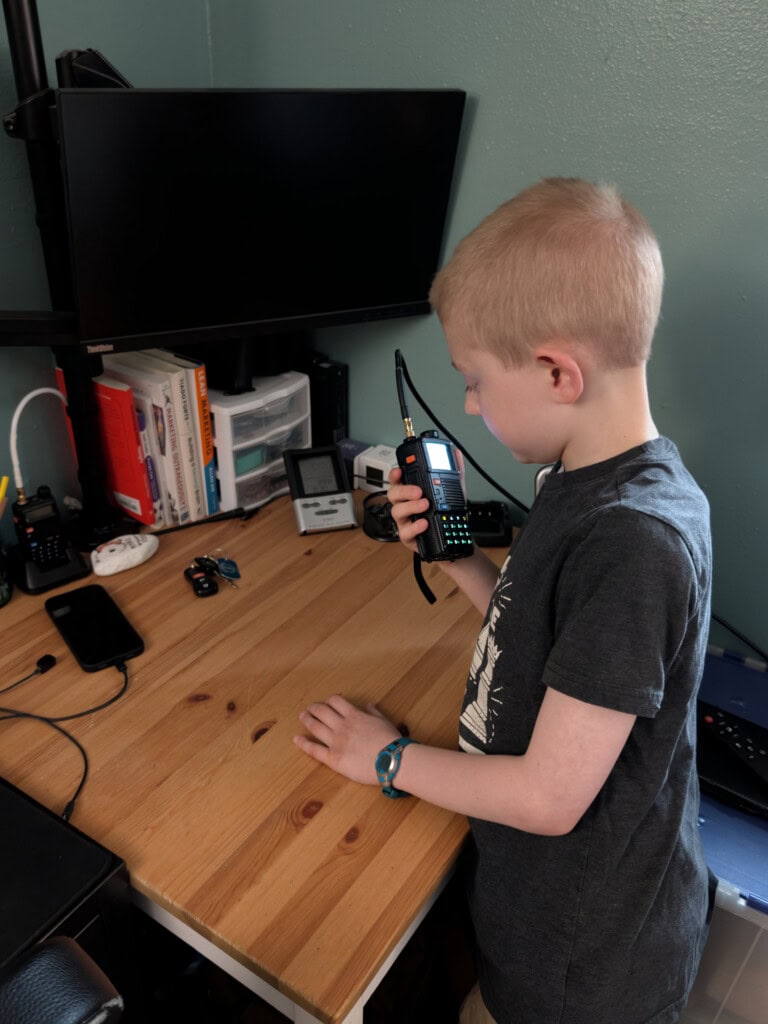
It’s also important to choose at least one person who is farther away. While local services may be down, a remote contact, for example in a different state, may not have any issues. This means services may go through to them when local lines are down.
Create a check-in script and provide it to everyone including your remote contact. Decide what information is important while keeping it short. Front load key details before general conversation in case lines get dropped mid call.
At minimum, your script should include:
- Who is checking in
- Current location
- Details matter but be aware of security. Kids should be general to avoid predators.
- Status
- Include both technology (such as battery levels) and physical (my leg is broken)
- Next move
- Given road conditions, and outside influences, providing a future location can help members continue to be located.
- Next check-in time
- Times are useful when batteries are low, to conserve power. EG: I will be on radio 5 minutes before the top of the hour until 5 minutes after.
Kid-Friendly Check-In Script
Keep your kid’s script short and to the point. When your kids are scared, it will be much harder for them to relay the proper information. For example:
“This is [Name OR Code-Name], I am at [Location], I am [Safe/Hurt], I am waiting for [Mom/Dad].”
Remote contacts can always reassure and try to calm children if possible. Just ensure they get the key information first!
You can include this script and other critical contact information on a notecard in your kid’s EDC kits. If you don’t know where to start with building Everyday Carry (EDC) kits for your kids, check out our guide of 5 essential EDC items (plus a special bonus item we include in kid EDC kits).
Start your preparedness in 5 minutes
Choose your rally points wisely for family safety
I recommend at least three locations in your plans. As I mentioned above, the location adapts.
Level 1 Rally Point – Why Home Base is your first priority
If the situation allows, home should always be your first priority. You have food storage, security, and abilities in your house that you would have on the road.
I would plan to have all family members try and meet here first. Fall back to a secondary location after a predetermined amount of time, or if home is known to be inaccessible or unusable.
Level 2 Neighborhood Rally – Keeping a place close to home
For more immediate threats, such as fire, having a secondary location nearby is key. Your close-to-home location should be accessible by foot.
Neighbors’ yards, local stores, or parking lots can all serve as a place to meet. If possible, plan for cover from weather. For example, a rally point at the shop could provide cover while waiting for everyone to arrive and then setting off again to another more secure location.
Level 3 Regional spots – Meeting up outside of a disaster area
In large scale evacuations, you might not be able to return home at all. Choosing a remote location, such as the gas station in the next town over, gives you options.
You should plan a few regional spots, with specific triggers. If this situation happens, we all fall back to here. If these locations are at risk, we move here instead.
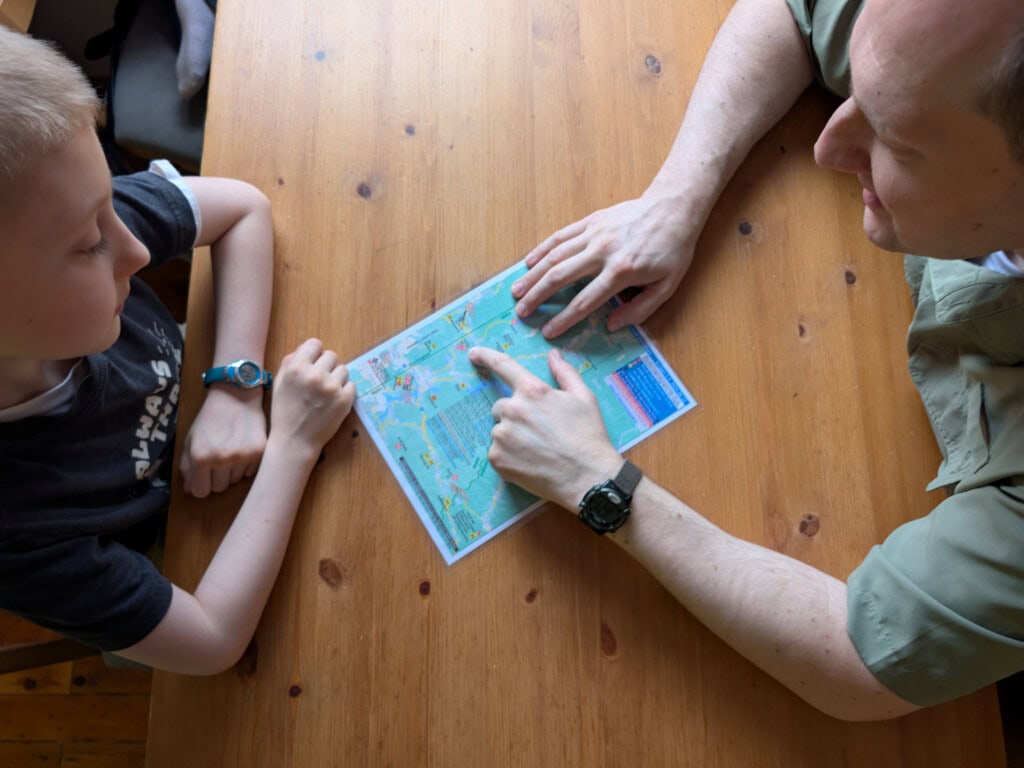
Keep your children on course
Kids get lost easily. Instead of relying on addresses alone, plan locations for kids by landmarks. For example, meet us at the city park by the big yellow slide.
It never hurts to get children involved with picking some of the locations. This helps them create an emotional connection and visually know the spot. Once you choose locations, record them in your Family Preparedness Binder.
It’s also a good idea to include address cards that kids can also show to a trusted adult who can help get them to the right location safely.
Common easy to identify landmarks can include:
- Church buildings with tall steeples
- Playgrounds
- Bridges or local landmarks
- Safe businesses such as coffee shops, museums, or libraries
- Fairgrounds or schools
Staying safe with coded language
While I would love to say that everyone out there has the best intentions, riots and unrest all common in disasters. Just look at the riots and lockdowns in 2020. And kids are often way too trusting of any adult.
Creating code names and words is a key part of security in your family communication plan. Teach your children to use code names over the radio. Have children describe locations using established code words.
You never know who will be listening. Using code allows your family to be safe from third party intercepts. Don’t forget to include a code word for when things go wrong or they are under duress. This can alert you in the event of an unauthorized pickup.
Your children’s plan should also include who will pick them up and where to get picked up, eliminating the quick “Your mom sent me.” risks.
Some simple code words could include:
- “Noodles” – I feel like I am being followed. EG: Can we have noodles with dinner tonight?
- “Applesauce” – The person I am with is not safe. EG: I already ate my applesauce pouch
- “Schoolbook” – I am being forced to move to a different rally point. EG: I left my schoolbook in the library.
Beyond code words, you can establish a safe word. This can be provided to the child if someone who was not planned is sent to meet with them, letting them know it’s safe to move with the unexpected adult. If the child challenges an unknown adult and is not provided with the safe word, they know to immediately seek trusted help such as a teacher or librarian.
Keeping physical plans and emergency contact cards
When family members leave the home carrying a physical emergency contact card can be useful. If you keep your plan tight enough, you can fit the outline of your plan and key emergency contacts on a laminated index card.
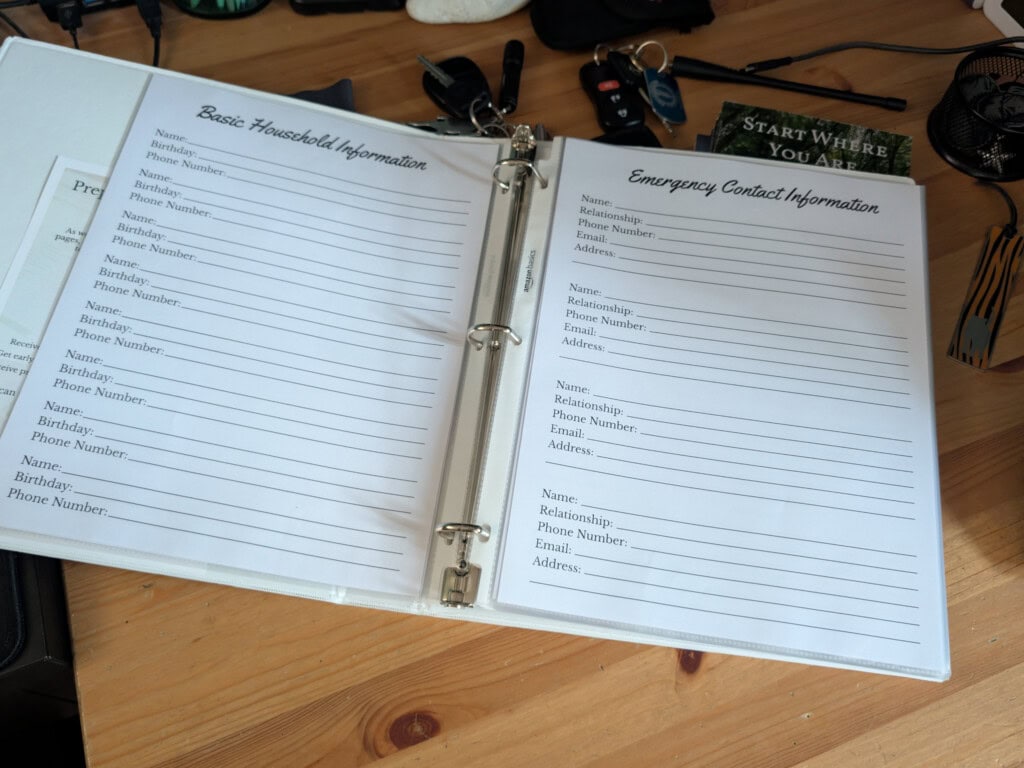
For children, ensure their cards include contacts, the PACE plan, and most importantly their information like address. It’s not a bad idea to include a photo of your family either. This way if they get lost, authorities can help them get home and verify you are the correct family.
Keep your cards and plans in your car glove box, 72-hour bags, daily backpacks, and most importantly inside your Family Preparedness Binder. If you don’t have a preparedness binder, I recommend you pick up a copy of our binder, either in digital or pre-printed physical.
Older kids can also pick up some of the load. You create the plan, and they can keep the gear up to date and ready for use. Getting the kids involved is key to offloading and avoiding task overload while helping them build strong life skills. I talk about this in depth in our guide on teaching kids practical preparedness.
Drills are the key to a panic free plan
Panic is built into human nature. It’s our first mode, but it can be programmed out.
Schedule times to practice radio communication skills, family meet ups, and chats with remote contacts. This creates a sense of calm and removes fear if something should happen. Practice allows for plan implementation without thought, saving time and quite possibly lives.
For example, my younger children are shy on the phone, so getting them used to making calls and the sound of our remote contacts helps them feel at ease when making the call for real. The same goes for radio practice and knowing what to say.
The key here is to make it fun for everyone. Maybe a family challenge to see who can memorize the phonetic alphabet first, or a running race to see who can get to the big tree rally point first. Or even using the FRS radios to play a family game of hide and seek on your property.
Running practice drills should become a part of life. Just like sitting down to dinner. Easy and enjoyable.
Everyday activities can become a low-key drill activity. You do not need extreme fear drills to learn. See our guide on teaching you kids practical preparedness skills for ideas on how you can turn a fun weekend into panic free drills.
The PACE Family Communication Plan in action
In the real world, things happen quickly. The plan should adapt, which is where PACE shines. In this quick example, you can see how family members would move through the plan, adapting to the changed circumstances.
- 2:00 PM: Power goes out, cell towers are intermittent. Primary (Texting) is used to confirm everyone is staying put.
- 3:00 PM: Towers fail completely with no signal. Dad initiates Alternate (GMRS Radio) check-in from work.
- 4:00 PM: Radio communication is unstable and repeaters bogged down. No local contact made. Family members call the Contingency (Out-of-Area Grandparents) to leave status reports.
- Evening: Weather continues to worsen, Mom makes the call that staying home is no longer safe and everyone moves to Emergency (Out of Town Rally Point).
As you can see, each step kept everyone safe and calm. They just moved step-by-step to keep the family intact.
Resilience starts with family involvement and a plan
Creating the plan might seem overwhelming at first. But it works best if you break it down. Start with the adults. Brainstorm who you want as contacts and where you want to meet.
Then introduce the plan to children. Give them time to digest the various parts. Don’t expect them to know everything instantly. Eventually everyone will be ready and gain the muscle memory to execute your family communication plan without hesitation.
The most important thing is starting somewhere.