In the uncertainty of today, there is one thing that’s certain: food prices are on the rise and inflation is at an all-time high. The basic staples that used to cost cents when I was a kid, now costs a few dollars. Loaves of bread that at regular price used to be $0.99 are $3+ each!
We’ve all seen how quickly egg prices can skyrocket. And so did anything that was made with eggs. When you buy everything, you are dependent on this system. And it feels impossible to save money on groceries without a store sale you can’t control.
Swapping simple items in the kitchen is not about depriving your family of tasty food. Having a from-scratch kitchen & pantry is the strong foundation of a frugal homestead. When we learn to swap these simple items, we not only save money on our grocery bill, but we build a healthier, more resilient home.
Preparation takes on a whole new meaning in a from-scratch homestead kitchen. We don’t go to the shelf, grab a can, and instantly serve a meal. Meals are made with love, one at a time. Cost is balanced with convenience. And homemade varieties become staples of life.
The 5 kitchen friendly swaps to start saving money
While there are lots of ways to save money, these are my favorite five swaps. You don’t have to go all or nothing. Not every item needs to be swapped constantly. Even a few times a month starts the savings train rolling forward.
I am not going to lie. We still buy bread from time to time. And I have canned beans and boxed broth sitting in my pantry right now. It’s not about perfection, it’s about creating a routine that helps you cut the inflating grocery bill.
As you work on this process, you will learn how to make the best use of your from-scratch pantry. Cutting down the number of items in your pantry helps to keep it simpler and better stocked. If you are not sure where to start with your pantry, I suggest starting with our guide on building a from-scratch pantry to see which staples are worth stocking in bulk.
Your Daily Bread – A Homemade Pantry Staple
Bread might seem intimidating at first. Rising times, keeping the yeast alive, kneading. It all seems simpler coming from a bag.
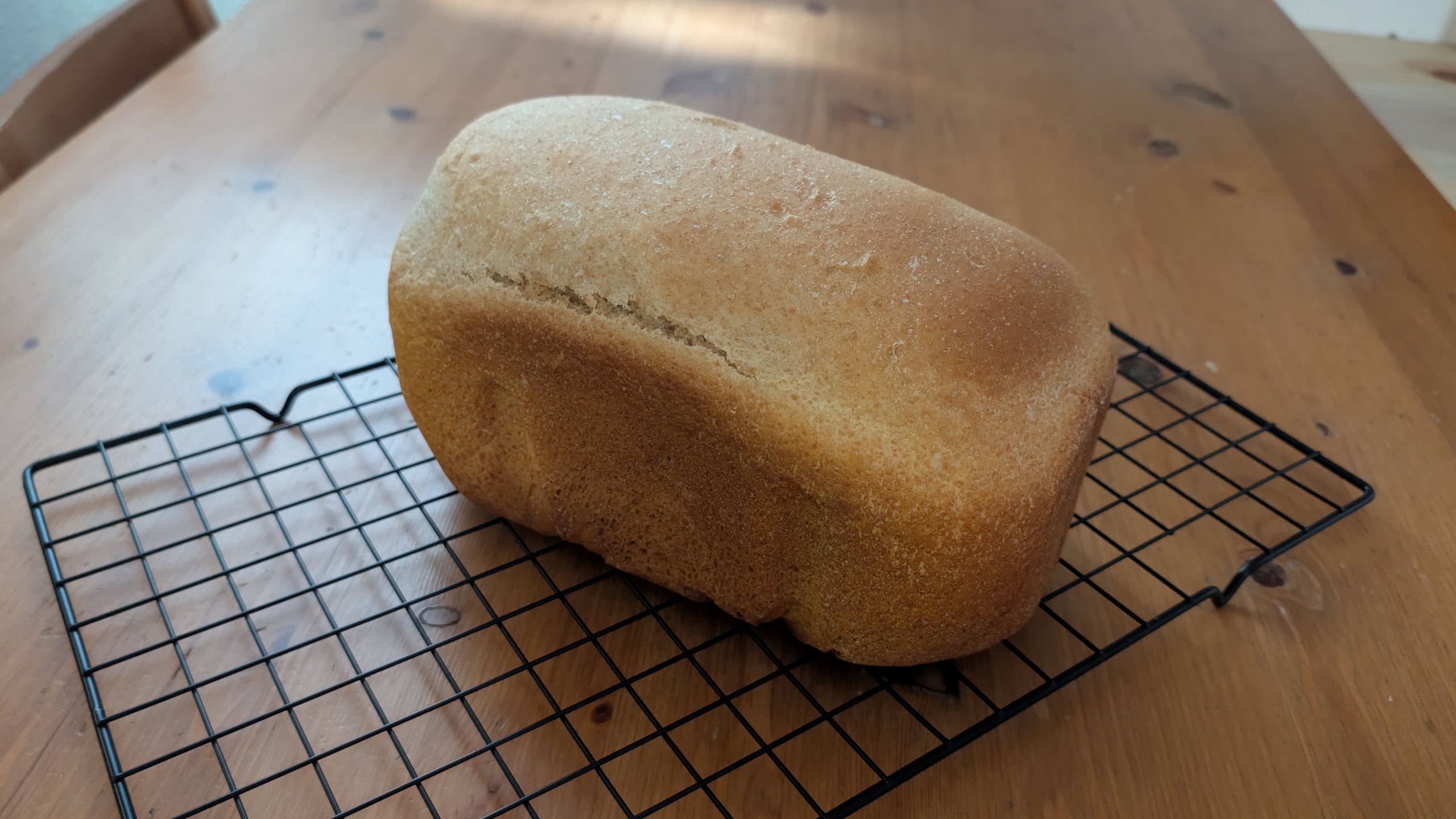
Yet once you master your first loaf and try that first slice hot out of the oven you will never want to go back. It’s amazing what bread can taste like without all the fillers.
Not only does homemade bread taste way better, its costs considerably less per loaf. Let me give you an example:
At our local Walmart a loaf of Franz Big White Bread costs $2.98.
Now let’s look at a loaf of homemade white bread. The basic ingredients are flour ($0.50), sugar ($0.05), yeast ($0.68), salt ($0.06), oil ($0.17), and water ($0.01). If you want a little fancier loaf, add some milk ($0.10), an egg ($0.14), and maybe some whole wheat blended in ($0.30). Total loaf cost: $2.01.
Drop your plain white bread and trade in sourdough starter, and you save another $0.68!
And this only compares your most basic loaf. Pan-style breads cost more, cruising past $5 per store-bought loaf. These can be made at home with the addition of a few ingredients, like oats, and are much healthier without gums and artificial ingredients.
Bulking up meals without cost – Dried Beans VS Canned
Dried beans are the ultimate way to save money on your groceries.
Living frugally on your homestead requires trading out convenience for a little leg work. Dried beans are a great representation of that process in action.
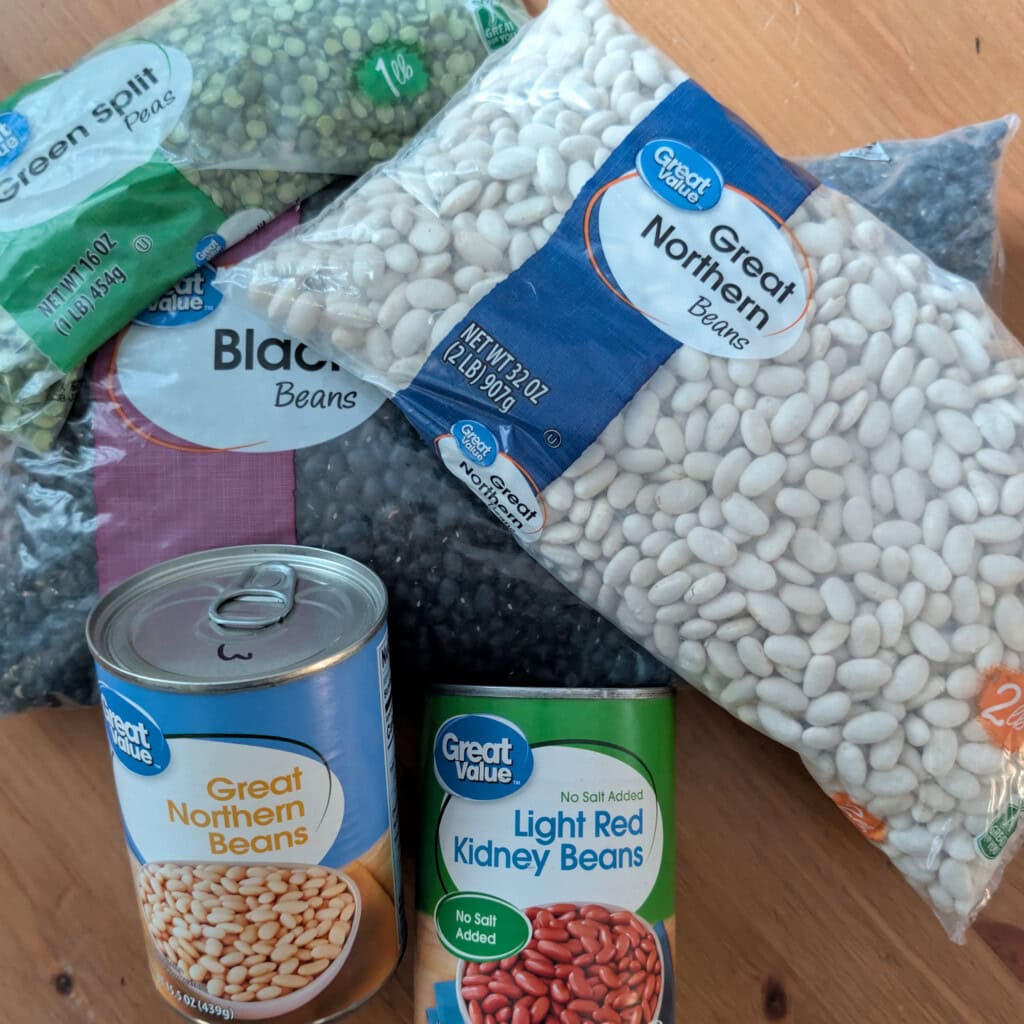
To turn a bag of beans into a usable product, they first need to be soaked and then cooked. In comparison, canned beans can simply be opened and dropped into a meal. However, the tradeoff for this inconvenience is significant.
A single can of black beans is $0.86, or $1.16 if you want organic. A 1lb bag of the same black beans runs $1.50. While a can of beans weigh anywhere from 13oz to 15oz, that is not all beans. Once drained, you end up with approximately 9oz of hydrated beans. That same 1lb of dried beans, once cooked, becomes 2.5lbs or more!
In terms of pricing, to get that same 2.5lbs of dried beans, it will cost you $3.82 in canned goods. That’s more than double in price. If your family eats a lot of beans, you could cut that line item on your grocery bill in half by purchasing dried varieties.
Plus, if you cook dried beans in larger batches and then either pressure can or freeze in smaller amounts, you gain the same quick meal convenience at the lower cost.
Saving money on the lunch plate – Sliced & canned meat
Processing is a large tax on our food. You are paying someone else to do the work for you. And often what you get is not as good or has many fillers to save the manufacture money.
Sliced lunch meat and canned meat are prime examples of this.
The average lunch meat package weighs 9oz or 16oz, with a cost of $3.18 to $6.24 respectively. During Easter or Christmas seasons, bone on ham tends to run $0.98/lb. That’s over six times less per pound!
Canned chicken is no exception for the processed food inflation. A single 12.5oz can of chicken runs $2.82 and contains around 30% in water weight. A full pound of chicken at a local store sits at $2.98. Buying in bulk from Costco or while the meat is on sale can be even cheaper.
If you are looking for that sliced perfection on a sandwich, many private butcher shops sell higher quality sliced meats, often with a similar or lower price tag. Even if the price is a little more, sourcing locally builds your community. This is a win for everyone.
It’s also possible to process, hang, smoke, and slice your meat. Tools will add cost, but divided over years of use, it comes out to pennies on the dollar. A worthy cost to make your own foods, exactly how you want them.
Jump start your pantry stock-up
Keeping flavor on your plate – Bulk seasonings
Shaker-sized seasonings are often the ultimate hidden way to increase meal prices.
In our household, the most common seasonings we use are garlic and onion. For 3-4oz shaker style bottles of these items, the average cost is $1.08 each. Buying in bulk drops the price per ounce normally around $0.05. Nothing dramatic.
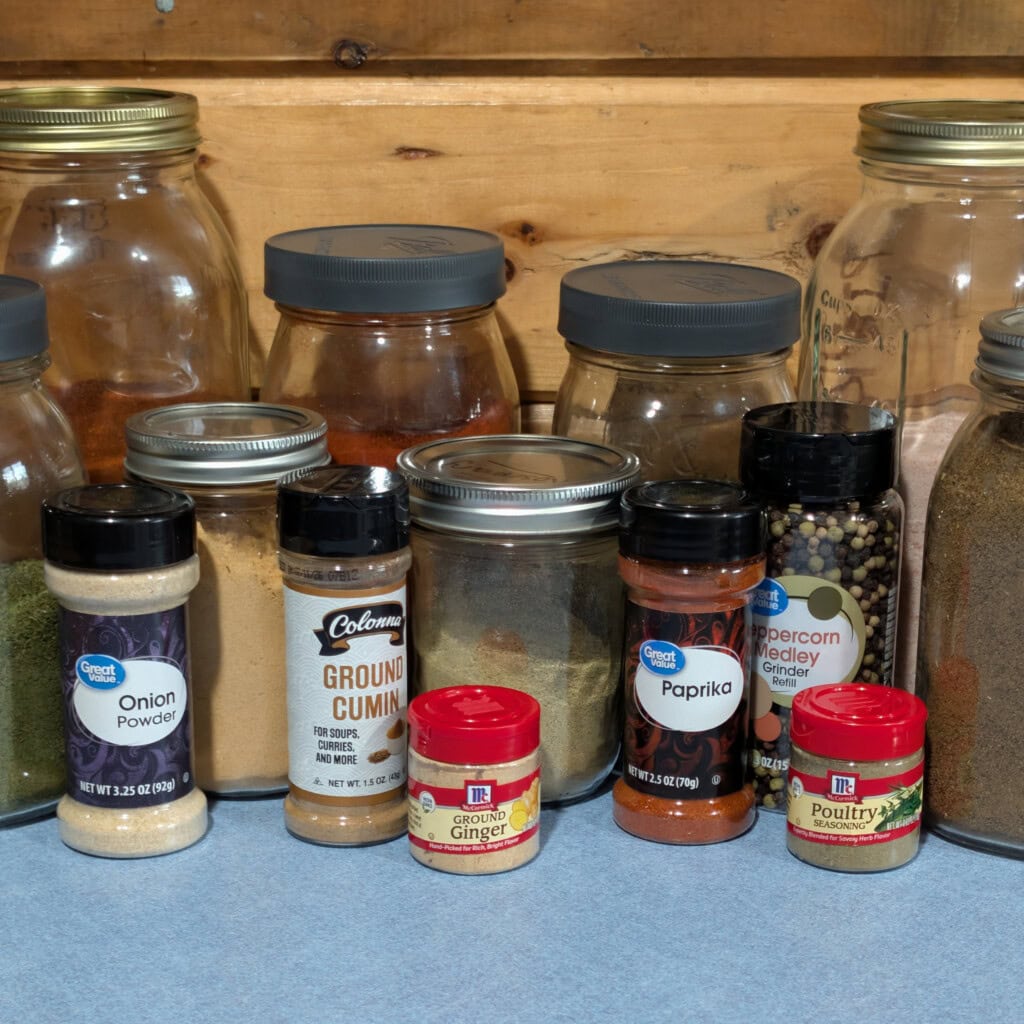
But when you look at a month worth of use, or a year, that $0.05 can quickly add up to dollars in savings.
Garlic and onion just scratch the surface of what is possible. Chili powder, cumin, and ground mustard powder are all much more expensive alone, with compounding savings when purchased in bulk.
Premixed seasoning packets are another place your grocery budget is taking a big hit. A 1oz packet of taco seasoning runs $0.47. It also contains cornstarch, silicone dioxide, and flavorings. You can make our taco seasoning mix for around $0.25 per serving. Almost 50% savings without all the fillers. You can also purchase our seasoning mix in bulk in the storehouse.
Buying in bulk and making your own flavors yields significant savings over ready-made versions. And the health benefits are great as well.
Cutting the sugar in breakfast – Oats VS cereal
Growing up, I remember many mornings getting ready for school started with a bowl of cereal. Lucky Charms, Cocoa Puffs, and Apple Jacks were common in our house.
A significant portion of these breakfast cereals are processed sugars and flavorings. Not the best way to start a day for anyone. But health problems aside, they flat out cost way more than simply making breakfast.
An 18oz box of Cocoa Puffs cost $4.97. At 14 servings per box, that’s $0.35 per serving. As a hungry teenager, I am positive I ate two or three servings in a single sitting. Now let’s look at swapping that bowl of cereal out for oatmeal.
A 42oz container of rolled oats cost $4.18. At 30 servings per container, each serving is $0.14. Two and a half times less. Add a touch of honey with a banana and breakfast just got a whole lot better.
The price of oats gets even better from bulk stores like Costco.
Eggs ($0.14 each), toast made from your homemade loaves ($0.16), and sliced strawberries ($0.13) are another option. While we are over our base cereal price, the protein in this breakfast will power your body much farther.
A frugal breakfast can be much healthier in the long run.
Cooking with flavor – Homemade broths
Have you ever peeled a carrot? Where did the scraps go? I hope they went to compost or animal feed. But there is another option you might not have thought about.
Vegetable stocks, chicken broth, and beef stock are made from simmered bones, meat and vegetables. And they are super easy to make at home. Plus, you can freeze or pressure can the broth for quick meal convenience.
Instead of buying a carton of chicken broth ($1.27) which is mostly water, you can make your own. Next time you have baked chicken, save the bones. Place them in a pot with some carrot peels, celery tops, onion and garlic. Cover with water and let simmer.
I can’t put a price on this one, because we are using scraps here. But that’s just it. You would have thrown these scraps out anyway. Now they are saving you money in the kitchen.
This concept works for any kind of broth. And makes for better soup, too.
When we make our homemade chicken noodle soup, we start with a whole chicken and boil it. The base of the soup flavor comes from the boiled chicken, bones and all.
A frugal homestead starts with the kitchen
These simple swaps are tools. Together, they allow you to create an engine that lowers your grocery bills. And that saved money feeds back into your homestead.
A dollar saved on bread becomes a dollar for animal feed or another rabbit. That same rabbit creates fertilizer for your garden and meat on the table. The cycle continues, each revolution needing less and less outside input.
And each cycle creates a healthier and stronger family. Resilience is built as we move off the world system and onto our own system.
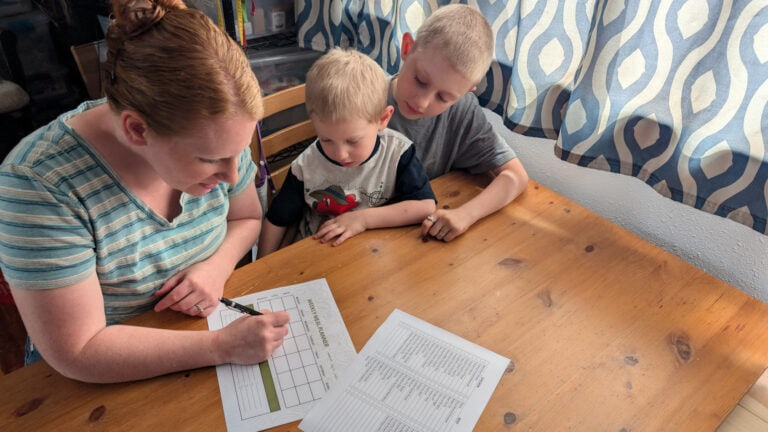
Remember to rotate your food and shop from the pantry first. Building the menu around anything you can buy rather than what you have is a sure way to increase your budget. This article talks about rotations and building a menu.
Moving beyond the kitchen pantry
Saving money in the kitchen is a great starting point. We all have to eat.
Yet the kitchen just scratches the surface of what’s possible on your homestead. Every little swap brings you closer. And in these uncertain economic times, saving budget is of critical importance.
Frugal living on the homestead starts everywhere. This article did a deep dive into individual foods and food cost. When you are ready to look beyond the kitchen, our extensive list of frugal living tips for the modern homestead is the perfect next step for your journey.
Making kitchen swaps and building a from-scratch kitchen is not only about the money in your bank account. It’s about being prepared. As your family becomes resilient, it opens the doors to what you can do. And allows you to make a bigger change in your community.
Note – Most prices in this article are sourced from the Walmart website. Individual ingredients were picked from smaller sizes, such as flour in 5lb bags over bulk purchasing. Buying larger quantities, or in bulk from restaurant supply stores or Costco can compound savings. Walmart was chosen as a universal option easily compared regardless of living location or memberships.