When most people think of food storage, they instantly think of freeze dried packaged meals with unknown ingredients and questionable taste. And if you go die-hard prepper, you will likely have at least a few of these meals sitting around.
But really food storage is just stocking up on the food you eat everyday so you have more on the shelf than this week’s worth of meals. A simple way of looking at this is our food storage framework: Plan > Buy > Store > Eat > Replace.
Plan the meals you want to eat, Buy groceries around what you plan, Store extra copies of that same meal, Eat those planned meals with your family, and lastly Replace what your family ate.
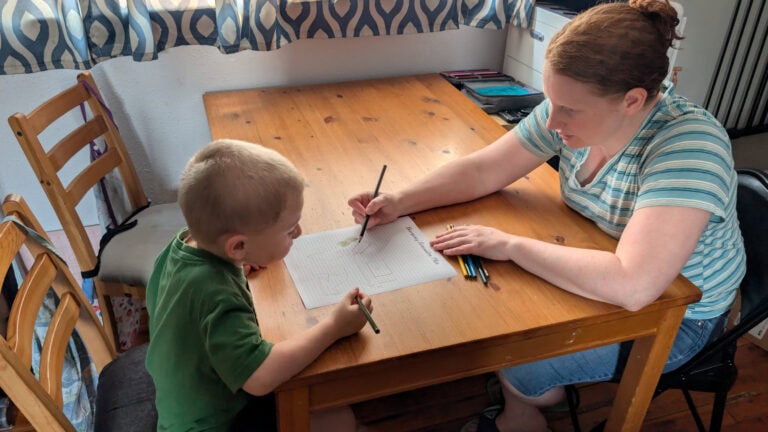
You are eliminating waste, saving effort, and know your kids will want to eat what you saved through proper food storage. When the whole family gets involved in choosing meals or cooking meals, the burden is removed. It’s no longer about spending hundreds of dollars to stock up, but just planning for everyday life.
Preparedness doesn’t need a million dollars. It needs a focused family who works together to survive on what they have, even if that starts out small and grows through time.
Why Fall Is the Perfect Time to Build Your Food Storage
Fall connects to building food storage perfectly. During the harvest, many stores run sales on produce. These cheaper prices allow you to build up foods that are cost prohibitive in other seasons. Stacked with cooling weather, home canning and food preparation becomes less of stress.
Most families can also tap into the back-to-school routine. While the kids are occupied with schoolwork, your time is freed up to accomplish food preparation tasks. Or even deep pantry rotation to find accidental duplicates or food that got missed on the last rotation.
Food storage is not designed to carry you through the end of the world. Instead it should be there for the winter storms that block the driveway, or knock down the power lines. For the seasonal cold that sweeps through the family stopping you from shopping for a week or two.
It’s also the perfect solution to a level budget without eating out every night. When you know you have meals on the shelf at home, the temptation to stop by the store and pick up a meal while your stomach is in control is removed.
A panicked rush gets you nowhere fast. Which is why this is a 4-week plan to build success, small steps at a time.
Week 1: Know What You Already Have
Week 1 is perhaps the hardest. And it’s certainly the most hands on work.
You cannot create a plan on a whim. Knowing exactly what is on each shelf is a critical detail that will lead to success.
During our reset plans, the first place I tend to start is seasonings and other active/open ingredient bins. We have a large set of jars with various seasonings and other core staples in our active ingredient cupboards. These all must be topped off using our deep stock.
Seasonings, flour, oils, sugars, and a variety of other ingredients sit in the active space, ready to be used in any meal. Full bins might mean opening an extra flour bag. Failing to fill the active stocks first results in a false count when I go deeper into the inventory.
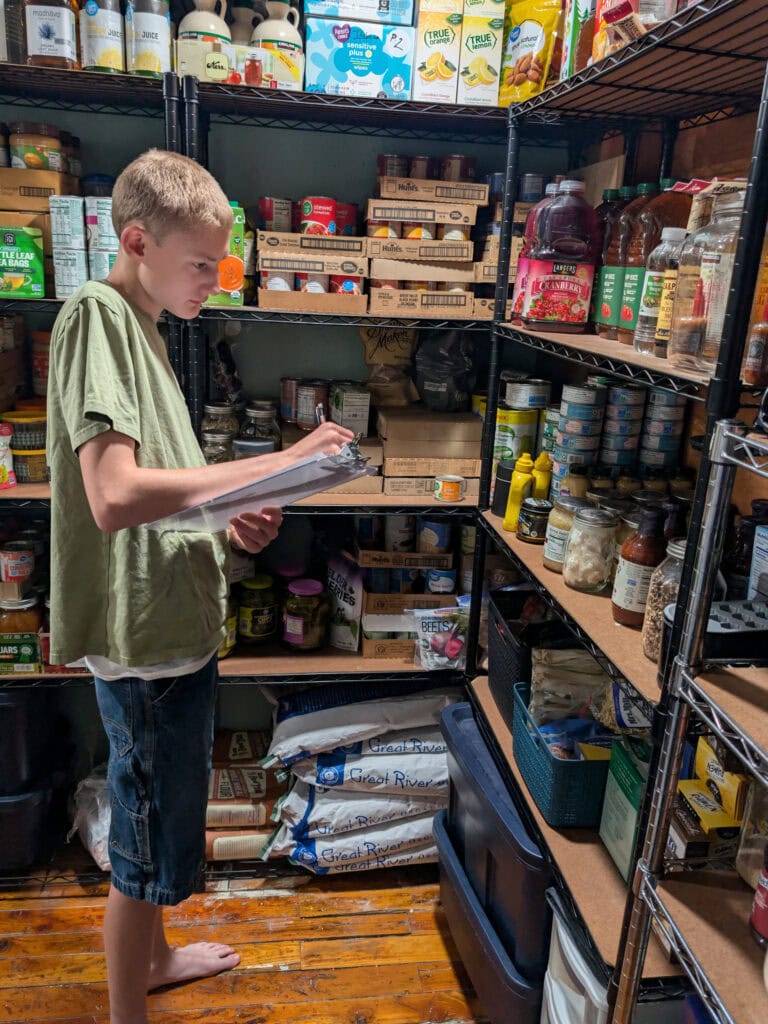
After all active stock items are topped up, now it’s time to go shelf by shelf completing the inventory. If you use our box-based number rotation system unloading shelves should be quick and easy. Flip cans, check dates, rotate old or newfound extra inventory into the flows. Move to the next shelf, tote, bed, closet or other storage nook.
Found money & food
It’s inevitable that during a deep inventory check, I will find something we duplicated on accident. A bag of cornmeal that fell behind a shelf, or was stuffed into the wrong tote by a child. This deep inventory process lets you find these mistakes before that food has a chance to expire. Money hiding in the form of extra food, and often bonus meals.
First in, first out food rotation is the primary goal. This will easily keep your shelves organized and well stocked without things going bad.
Handling produce
It never hurts to inventory produce, but keep in mind as you plan you menus the needed fresh produce amounts will change. We try and stock onions, carrots, potatoes, bananas, apples, and any seasonal produce we like to eat.
Week 2: Plan What Your Family Actually Eats
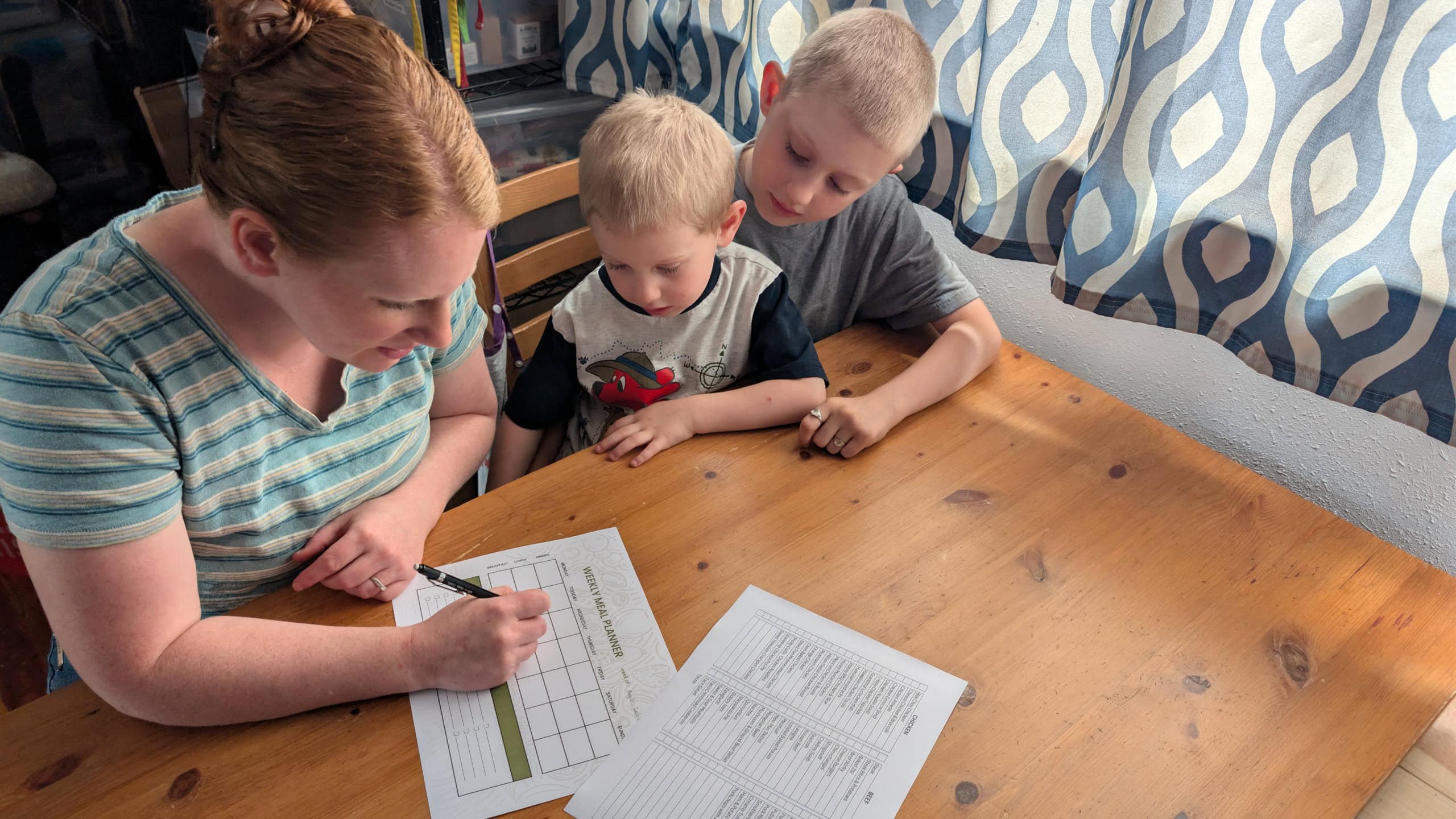
With your complete inventory in hand, now is the time to plan.
When we started the planning process a few years ago, we started with all the meals that our family liked to eat. If it was a meal we would eat more than once a month, it made it to the top of the list. Naturally simple meals like Taco Salad and Bonnie’s Chicken ended up towards the top.
From our list, we began to deconstruct these meals. How often would we eat them, and what exact ingredients would need to sit on the shelf to make them?
Break apart meals into core ingredients
Simple meals like Taco Salad might only need a few canned items and a pound of ground beef. Others might be very complex and tap into lots of ingredients in the active space. Recipes like waffles use flour, sugar, oil, and so much more to complete them. You will need to estimate what percentage of core ingredients each recipe uses. And this will vary by family. Waffles for us might take half a 5# bag of flour, while your family might be a quarter.
If I know that waffles or pancakes take half a bag, then I will need two or three bags to have these meals at least once per week. This in turn will help you extrapolate how much of each core ingredient you need on the shelf.
Meal planning made easy
For most families starting a pantry and food storage rotation, planning meals is not easy. It can be hard to figure out what you might want to eat a week or month from now.
I would encourage you to start with a single week. But don’t treat the weekly menu as an absolute rule. If you don’t feel like the meal that is on the list for the day, snag tomorrow’s. Shuffle the menu around freely to make your family (and stomachs) happy.
There are some weeks we don’t get to all the meals we planned. And that’s okay. Non-perishable items just become more food stores. And the new meal we came up with is removed from the shelf.
Start with a week, then add weeks as you get more comfortable with planning. Add a few buffer meals to ensure you can freely shuffle and still have everything you need. The only rule we try to hold is not let specific produce for a planned meal go bad.
Expect life to happen
We all have bumps in the road. Expect you will have a few in any given month and don’t beat yourself up when the menu is put aside for a dinner out.
What counts more is that you made the effort. With meal planning already in place, a skipped meal just adds to your food storage.
Jump start your pantry stock-up
Week 3: Build Your Pantry Gradually
Unless you only get paid once a month, you don’t likely have a ton of money sitting around to start with. It’s estimated that at least half of all American’s live paycheck to paycheck. Probably more like 60%. For most, that means going out and spending lots of extra on food is not an option.
And it does not have to be!
By starting with weekly menu planning, you are building a core of food security. With the core menu plus a meal or two buffer, you begin to build the food storage you are dreaming about. Not $100’s per paycheck, but $10 or $20.
Each new menu adds a new extra meal, slowly but surely building your food stocks.
Avoid feeling and giving into the ‘prepper’ trap. You DO NOT need hundreds of dollars in freeze dried meals. Nor do you need lots of wheat berries when you have no grinder or plan to use them. That kind of doomsday thinking has no place in a prepared family.
Gradual food buildup of the exact food on your menu and what your family will eat leads to food security. 25-year-old freeze dried randomness leads to a pile of money no one ever wants to eat.
Don’t get me wrong. Real freeze dried food has a place. And is great for food storage. But it still should be rotated and eaten by your family. So unless you already have the freeze dryer, skip the freeze dried meals for now. A few cans of dried milk and other core ingredients are good for your 72-hour emergencies, not daily life. Or the weekend backpacking trip to the backcountry.
Week 4: Make Your Food Storage Revolve
Expired goods help no one. And I hate to say it, but the more complex you make your rotation and tracking system,the less likely everyone in the house will use it.
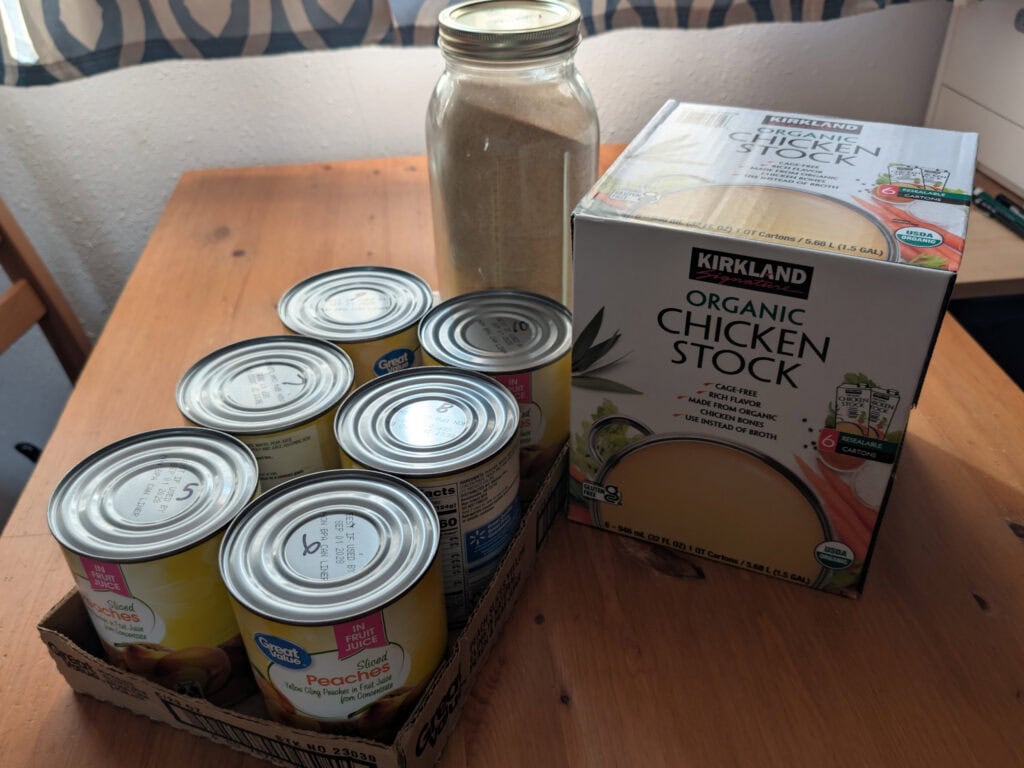
When it comes to rotation, simple will always win. That is why our box based rotation system works so well. It takes little thought to set up, little effort to rotate, and the oldest item is always on top. With a simple list of how many of each item should be on the shelf, we know what we have on hand within a small margin of used items.
Plus by only stocking items that are used in the top 10 or 15 meals our family eats, we don’t have useless random food sitting on the shelf (just ignore those cans of peas, please). We eat what we purchase with few exceptions when everything is tied to a core recipe.
Monthly upkeep wins
Deep rotations are not a monthly chore. Even with a simple system in place, trying to check and monitor every item every single month is exhausting.
Instead of going deep all the time, the Fall Food Storage Plan handles the heavy yearly lifting while small month stock checks take over the regular work. A quick look at the shelf shows the missing items and they get added to the grocery list. Kids can quickly handle putting everything away when you get home from the latest shopping run.
Keep the process low stress and it will stick with your family for the long haul.
What Does This Actually Look Like? A 3-Day Pantry Meal Plan
Menu planning can be a simple spreadsheet or even just a written list. For example, this simple menu below was written on a phone while traveling to a doctors appointment.
Example 3-day menu & shopping/pantry list
- Wed
- B – Eggs, Fruit & Toast
- Dozen eggs, bananas, fresh bread
- L – Sub Sandwiches
- Sandwich rolls, lunch meat, cheese, pickles
- D – Bonnie’s Chicken
- Crackers, frozen chopped chicken, butter, cheese, potatoes, canned beans
- B – Eggs, Fruit & Toast
- Thurs
- B – Pancakes
- Flour, sugar, baking powder (check shelf for backup)
- L – Chicken Quesadillas
- Flour, salt, canned chicken, cheese, seasonings
- D – Pork Chops in Mushroom Sauce
- Pork chops, cream of mushroom soup, canned beets, sour cream, potatoes
- B – Pancakes
- Fri
- B – Diced ham & eggs
- Leftover ham pack (check if we have), eggs, cheese, bread
- L – Meat, Cheese & Crackers
- Meat jerky, cheese, homemade crackers (cheese, flour, baking powder)
- D – Crockpot Beef Stew
- Potatoes, carrots, jarred beef broth, stew meat
- B – Diced ham & eggs
Remember, as you plan your menu you can account for bumps like power outages. If I can’t use the oven directly, I can use my dutch oven. Or fix diced ham & eggs over a camp stove. You can dig into this concept more with out Family Power Outage Guide.
Your buffer meal can also come into play when things go sideways.
During the height of summer, one minute the weather might claim its going to be cool and the reality comes out very different. Having a backup meal means the oven meal I planned and don’t want to heat the house with can be traded for a quick stove top skillet meal.
The Simple Food Storage System to Keep Using
Food storage seems like a huge project. The key is taking it one step at a time. That is why Plan > Buy > Store > Eat > Replace is so important. It creates your stock without deep thought or complex prepper plans.
When you start by locking your food storage to a set number of meals, everything becomes easier. Instead of needing hundreds of unique ingredients, you have a set core which interchanges into lots of meals.
This does not mean you can never have a meal that goes off script from the food you have on the shelf. It means you always have meals you can fall back on when that winter storm hits and you can’t go shopping as planned.
Food storage grows one meal at a time while your family still eats what they love.
You Don’t Need a Perfect Pantry
Perfection is a myth. And anyone that is proud of the amount of food storage is just a step ahead of you, or is eating MRE’s in the apocalypse. Your pantry does not need to become the perfect stock overnight.
Don’t destroy your family budget giving into fear and prepper buying. Instead slowly grow your storage, feed your family, and feel success as the cans stocked on the shelf multiply one-by-one.
Food storage is about eliminating fear and finding comfort in the food your family has to eat when daily life throws a hiccup. Leave doomsday for the next guy.